MedicalResearch.com Interview with:
[caption id="attachment_56244" align="alignleft" width="197"]

Dr. Schellekens[/caption]
Harrië
t Schellekens MSc PhD
Lecturer
Department of Anatomy & Neuroscience,
and APC Microbiome Ireland SFI Research Centre
University College Cork, Cork, IRELAND.
MedicalResearch.com: What is the background for this study?
Response: There has been an increased emphasis on gut microbiota-targeted therapeutics for the amelioration of obesity. Recent studies have identified several probiotic strains with different anti-obesity effects, including members of the genus
Bifidobacterium, but the exact mechanisms of action are still lacking.
Moreover, positive effects in animal studies often do not translate in human studies.
The APC Microbiome Ireland has set up a “culture-to-product” platform, a well catalogued and quality controlled collection of bacteria with potential biofunctional activities. In my laboratory, I have developed a state-of the art “bug-to-drug” screening approach, using high-throughput biochemical and cellular assays, to fully characterize bacteria and identify the most promising bacterial strains with specific desirable probiotic and functional properties. This careful
in vitro screening of APC’s strains (or customer strains) is designed to identify the most potent candidates that can impact on host physiology and overall gut-brain axis function, e.g. by producing microbial metabolites or neuroactives, altering gut-barrier function, reducing inflammation, or modifying G-protein coupled receptors. This comprehensive screening approach facilitates the precise selection and prediction of the best strains that are likely to yield a specific positive health effects in subsequent animal and human studies, based on their
in vitro probiotic and functional properties.





 Dr. Butler[/caption]
Jay C. Butler, MD, FAAP, MACP, FIDSA
Deputy Director for Infectious Diseases
Centers for Disease Control and Prevention
Atlanta, GA 30333
MedicalResearch.com: What is the background for this study?
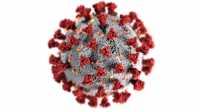
Response: There are still disagreements about the significance of transmission of SARS-CoV-2 from asymptomatic persons. It has been known since at least March 2020 that, unlike the closely related coronavirus that causes SARS, transmission of COVID-19 from asymptomatic and presymptomatic persons occurs and that at least 30% of infected persons do not develop symptoms. Estimating the proportion of transmissions from persons without symptoms informs the decision analysis for prioritization of community mitigations opportunities: wearing of masks, social distancing, and hand hygiene. If only a low proportion of transmission occurs from people without symptoms, these interventions would be less likely to control transmission when broadly applied in the community. On the other hand, if a significant proportion of spread is from infected persons without symptoms, the value of these measures is enhanced.
Additionally, obtaining strategic and systematic screening tests for SARS-CoV-2 to identify and isolate persons without symptoms in selected settings, such as congregational housing settings, will have greater potential impact if spread from persons without symptoms is common.
Dr. Butler[/caption]
Jay C. Butler, MD, FAAP, MACP, FIDSA
Deputy Director for Infectious Diseases
Centers for Disease Control and Prevention
Atlanta, GA 30333
MedicalResearch.com: What is the background for this study?
Response: There are still disagreements about the significance of transmission of SARS-CoV-2 from asymptomatic persons. It has been known since at least March 2020 that, unlike the closely related coronavirus that causes SARS, transmission of COVID-19 from asymptomatic and presymptomatic persons occurs and that at least 30% of infected persons do not develop symptoms. Estimating the proportion of transmissions from persons without symptoms informs the decision analysis for prioritization of community mitigations opportunities: wearing of masks, social distancing, and hand hygiene. If only a low proportion of transmission occurs from people without symptoms, these interventions would be less likely to control transmission when broadly applied in the community. On the other hand, if a significant proportion of spread is from infected persons without symptoms, the value of these measures is enhanced.
Additionally, obtaining strategic and systematic screening tests for SARS-CoV-2 to identify and isolate persons without symptoms in selected settings, such as congregational housing settings, will have greater potential impact if spread from persons without symptoms is common. 


 Dr. Joshi[/caption]
Nitin Joshi, Ph.D.
Engineering in Medicine/Department of Medicine
Brigham and Women's Hospital
[caption id="attachment_56349" align="alignleft" width="100"]
Dr. Joshi[/caption]
Nitin Joshi, Ph.D.
Engineering in Medicine/Department of Medicine
Brigham and Women's Hospital
[caption id="attachment_56349" align="alignleft" width="100"]


 Dr. McGahan[/caption]
Anita M. McGahan PhD, MBA
University Professor
Professor of Strategic Management
Professor, Munk School of Global Affairs & Public Policy
George E. Connell Chair in Organizations & Society
Rotman School of Management
University of Toronto
MedicalResearch.com: What is the background for this study? What are the main findings?
Response: The article by Phebo Wibbens, Wesley Wu-Yi Koo, and me that came out today in PLOS ONE at
Dr. McGahan[/caption]
Anita M. McGahan PhD, MBA
University Professor
Professor of Strategic Management
Professor, Munk School of Global Affairs & Public Policy
George E. Connell Chair in Organizations & Society
Rotman School of Management
University of Toronto
MedicalResearch.com: What is the background for this study? What are the main findings?
Response: The article by Phebo Wibbens, Wesley Wu-Yi Koo, and me that came out today in PLOS ONE at 
 Dongmei Li, Ph.D.[/caption]
Dongmei Li, Ph.D., Associate Professor
Clinical and Translational Science Institute
University of Rochester Medical Center
MedicalResearch.com: What is the background for this study?
Response: Previous animal and human studies have found that nicotine exposure could harm adolescents’ brain development and impact their cognitive functions. Electronic cigarettes, which have become very popular among youth in the US in recent years, usually contain nicotine at equivalent or possibly higher levels than traditional tobacco cigarettes. Thus, it is reasonable to assume that vaping might be associated with self-reported cognitive complaints.
MedicalResearch.com: What are the main findings?
Response: Main findings from our study are:
Dongmei Li, Ph.D.[/caption]
Dongmei Li, Ph.D., Associate Professor
Clinical and Translational Science Institute
University of Rochester Medical Center
MedicalResearch.com: What is the background for this study?
Response: Previous animal and human studies have found that nicotine exposure could harm adolescents’ brain development and impact their cognitive functions. Electronic cigarettes, which have become very popular among youth in the US in recent years, usually contain nicotine at equivalent or possibly higher levels than traditional tobacco cigarettes. Thus, it is reasonable to assume that vaping might be associated with self-reported cognitive complaints.
MedicalResearch.com: What are the main findings?
Response: Main findings from our study are:

 Dr. Li[/caption]
Li Li, MS, PhD Candidate
Division of Epidemiology, College of Public Health, Ohio State University
Graduate Research Associate, Center for Injury Research and Policy
The Abigail Wexner Research Institute at Nationwide Children’s Hospital
MedicalResearch.com: What is the background for this study?
Response: Marijuana use impairs cognitive abilities necessary for safe driving, including reaction time, road lane-tracking ability, and attention maintenance. Given increasing legalization of marijuana use in the US, our study aimed to estimate marijuana-impaired driving among teens at a national level and help to identify the current prevalence to guide future intervention programs.
Dr. Li[/caption]
Li Li, MS, PhD Candidate
Division of Epidemiology, College of Public Health, Ohio State University
Graduate Research Associate, Center for Injury Research and Policy
The Abigail Wexner Research Institute at Nationwide Children’s Hospital
MedicalResearch.com: What is the background for this study?
Response: Marijuana use impairs cognitive abilities necessary for safe driving, including reaction time, road lane-tracking ability, and attention maintenance. Given increasing legalization of marijuana use in the US, our study aimed to estimate marijuana-impaired driving among teens at a national level and help to identify the current prevalence to guide future intervention programs. 










 Rebecca McNally[/caption]
Rebecca McAdams, MA, MPH
Senior research associate
Center for Injury Research and Policy
Nationwide Children’s Hospital
Columbus, OH
MedicalResearch.com: What is the background for this study?
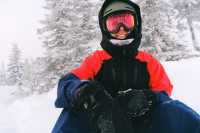
Response: Sledding is a popular winter activity in communities across the country, but it may not be as risk-free as many people think.
MedicalResearch.com: What are the main findings?
Response: We found that 220,488 patients were treated in U.S. emergency departments for injuries related to sledding from 2008 through 2017. Nearly 70% of these patients were children age 19 years and younger. Compared to adults, children were almost seven times as likely to be treated in an emergency department for a sledding-related injury.
The majority of patients were injured as the result of a collision (63%). Collision injuries occurred when the patient made contact with an object in the environment (47%), when they hit the ground (16%), or when they ran into another person (10%) or sled (7%).
Head injuries are a serious concern during sledding. The head was the most frequently injured body part for children. In fact, nearly 82% of those who sustained an injury to the head were children. The type of sled can also impact the risk of head injury. Children injured while riding snow tubes and disks had a greater risk of sustaining a concussion or CHI than children who were riding sleds or toboggans. Researchers recommend wearing a helmet while sledding to reduce the risk and severity of head injuries.
While less frequent (3% of all cases), injuries occurring as a result of the sled being pulled by a motorized vehicle such as a car, ATV or snowmobile resulted in more serious injuries that required hospitalization (14%). This practice should be avoided.
Rebecca McNally[/caption]
Rebecca McAdams, MA, MPH
Senior research associate
Center for Injury Research and Policy
Nationwide Children’s Hospital
Columbus, OH
MedicalResearch.com: What is the background for this study?
Response: Sledding is a popular winter activity in communities across the country, but it may not be as risk-free as many people think.
MedicalResearch.com: What are the main findings?
Response: We found that 220,488 patients were treated in U.S. emergency departments for injuries related to sledding from 2008 through 2017. Nearly 70% of these patients were children age 19 years and younger. Compared to adults, children were almost seven times as likely to be treated in an emergency department for a sledding-related injury.
The majority of patients were injured as the result of a collision (63%). Collision injuries occurred when the patient made contact with an object in the environment (47%), when they hit the ground (16%), or when they ran into another person (10%) or sled (7%).
Head injuries are a serious concern during sledding. The head was the most frequently injured body part for children. In fact, nearly 82% of those who sustained an injury to the head were children. The type of sled can also impact the risk of head injury. Children injured while riding snow tubes and disks had a greater risk of sustaining a concussion or CHI than children who were riding sleds or toboggans. Researchers recommend wearing a helmet while sledding to reduce the risk and severity of head injuries.
While less frequent (3% of all cases), injuries occurring as a result of the sled being pulled by a motorized vehicle such as a car, ATV or snowmobile resulted in more serious injuries that required hospitalization (14%). This practice should be avoided. 

 Dr. Aronne[/caption]
Dr. Louis Aronne, MD, FACP
Chief Medical Officer, Intellihealth
Medical Director, Comprehensive Weight Control Center
Weill Cornell Medicine
MedicalResearch.com: What is the background for the study “Effect of an Online Weight Management Program Integrated With Population Health Management on Weight Change: A Randomized Clinical Trial”?
Response: More than 70% of U.S. adults have overweight or obesity. Online programs promoting lifestyle change have had some success in helping people achieve and maintain weight loss, but study results have been variable, and these programs have not been widely implemented in primary care. We studied the effectiveness of an online program we have developed (Intellihealth, formerly known as BMIQ) in routine primary care practices, both alone and integrated with population health management (with participants receiving additional support and outreach from nonclinical staff). The study’s objective was to determine whether a combined intervention integrating online weight management with population health management would increase weight loss at 12 months among primary care patients compared with the online program only and usual care.
Dr. Aronne[/caption]
Dr. Louis Aronne, MD, FACP
Chief Medical Officer, Intellihealth
Medical Director, Comprehensive Weight Control Center
Weill Cornell Medicine
MedicalResearch.com: What is the background for the study “Effect of an Online Weight Management Program Integrated With Population Health Management on Weight Change: A Randomized Clinical Trial”?
Response: More than 70% of U.S. adults have overweight or obesity. Online programs promoting lifestyle change have had some success in helping people achieve and maintain weight loss, but study results have been variable, and these programs have not been widely implemented in primary care. We studied the effectiveness of an online program we have developed (Intellihealth, formerly known as BMIQ) in routine primary care practices, both alone and integrated with population health management (with participants receiving additional support and outreach from nonclinical staff). The study’s objective was to determine whether a combined intervention integrating online weight management with population health management would increase weight loss at 12 months among primary care patients compared with the online program only and usual care.
 Dr. Magnusson[/caption]
Karin Magnusson PT, PhD
Associate Researcher
Lund University and
Norwegian Institute of Public Health
MedicalResearch.com: What is the background for this study?
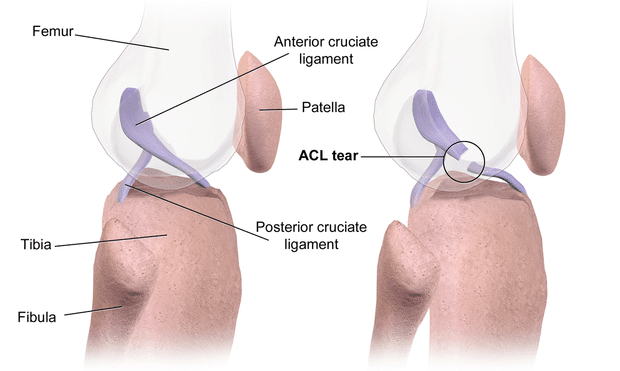
Response: Anterior cruciate ligament (ACL) injury is one of the most common knee injuries, for which very limited data has been presented on the genetic contribution. Based on our knowledge of the role of genetics in the development of ACL-rupture related traits, such as joint hypermobility and knee osteoarthritis, we hypothesized that heritability might play a role also in ACL injury.
Using the Swedish Twin Registry, which is the world's largest twin registry and in this study including more than 88.000 twins, we had unique data to for the first time reliably estimate the heritability for this common knee injury.
Dr. Magnusson[/caption]
Karin Magnusson PT, PhD
Associate Researcher
Lund University and
Norwegian Institute of Public Health
MedicalResearch.com: What is the background for this study?
Response: Anterior cruciate ligament (ACL) injury is one of the most common knee injuries, for which very limited data has been presented on the genetic contribution. Based on our knowledge of the role of genetics in the development of ACL-rupture related traits, such as joint hypermobility and knee osteoarthritis, we hypothesized that heritability might play a role also in ACL injury.
Using the Swedish Twin Registry, which is the world's largest twin registry and in this study including more than 88.000 twins, we had unique data to for the first time reliably estimate the heritability for this common knee injury.