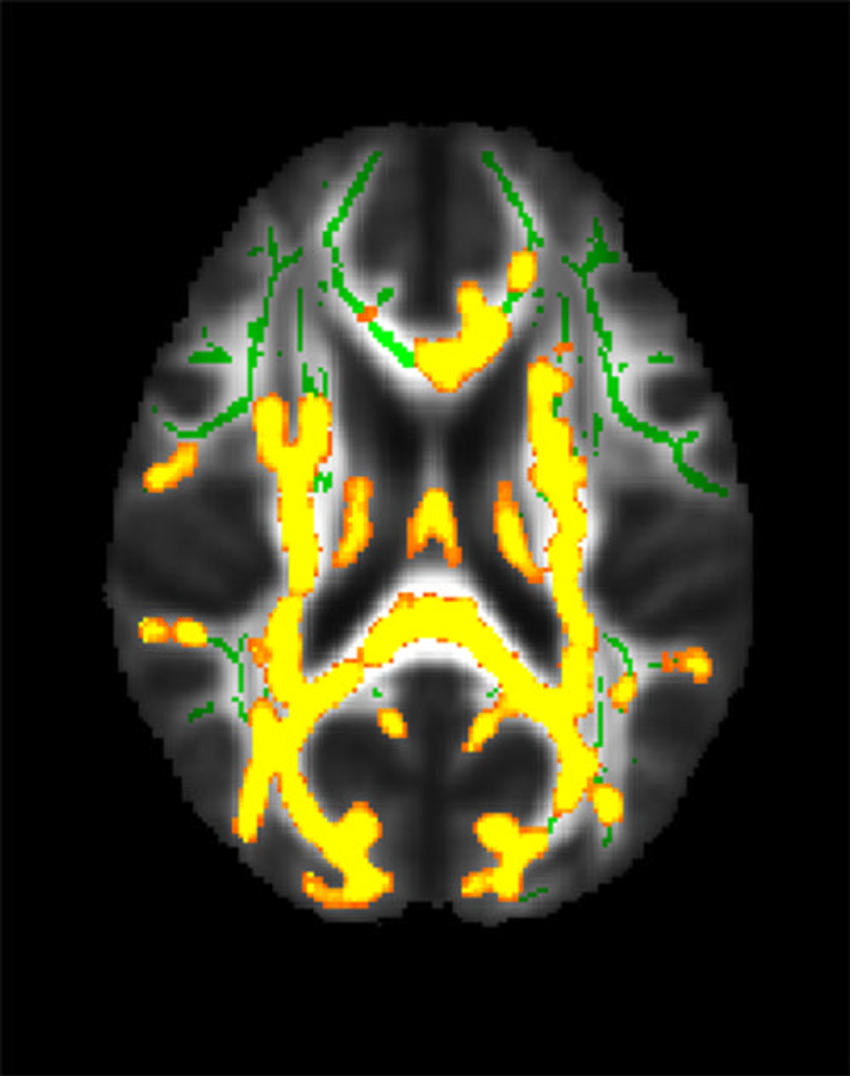
28 Nov RSNA23: WashU Study Finds Link Between Hidden Belly Fat and Alzheimer’s Disease
MedicalResearch.com Interview with:
[caption id="attachment_61098" align="alignleft" width="160"] Dr. Dolatshahi[/caption]
Mahsa Dolatshahi, M.D., M.P.H.
Post-doctoral research fellow
Mallinckrodt Institute of Radiology (MIR)
Washington University School of Medicine
St. Louis
MedicalResearch.com: What is the background for this study?
Response: Obesity at midlife is recognized as a risk factor for developing Alzheimer disease decades afterwards. However, body mass index on its own does not adequately represent the risks associated with obesity.
In this study, we went beyond BMI and considered anatomical distribution of body fat, including the metabolically active visceral fat in the belly, and showed its association with Alzheimer pathology in the form of amyloid proteins. In addition, visceral fat along with obesity and insulin resistance were associated with thinning of brain cortex, as early as midlife.
Dr. Dolatshahi[/caption]
Mahsa Dolatshahi, M.D., M.P.H.
Post-doctoral research fellow
Mallinckrodt Institute of Radiology (MIR)
Washington University School of Medicine
St. Louis
MedicalResearch.com: What is the background for this study?
Response: Obesity at midlife is recognized as a risk factor for developing Alzheimer disease decades afterwards. However, body mass index on its own does not adequately represent the risks associated with obesity.
In this study, we went beyond BMI and considered anatomical distribution of body fat, including the metabolically active visceral fat in the belly, and showed its association with Alzheimer pathology in the form of amyloid proteins. In addition, visceral fat along with obesity and insulin resistance were associated with thinning of brain cortex, as early as midlife.

 Dr. Mohyuddin[/caption]
Hira Mohyuddin, PGY-2
Psychiatry Residency Training Program
The George Washington University
MedicalResearch.com: What is the background for this study?
Response: Frailty has become increasingly significant as the global population grows older, as this syndrome is linked with a higher mortality and morbidity in aging. Causes contributing to frailty are poorly understood, but it seems that the role of inflammation is very likely.
While other chronic infections were shown to precipitate and perpetuate inflammation that contributes to the development of frailty, no prior study has previously focused on possible links between Toxoplasma gondii and geriatric frailty. Benefiting from a collaboration with Spanish and Portuguese researchers, we have now tested, for the first time to our knowledge, this possible association.
Dr. Mohyuddin[/caption]
Hira Mohyuddin, PGY-2
Psychiatry Residency Training Program
The George Washington University
MedicalResearch.com: What is the background for this study?
Response: Frailty has become increasingly significant as the global population grows older, as this syndrome is linked with a higher mortality and morbidity in aging. Causes contributing to frailty are poorly understood, but it seems that the role of inflammation is very likely.
While other chronic infections were shown to precipitate and perpetuate inflammation that contributes to the development of frailty, no prior study has previously focused on possible links between Toxoplasma gondii and geriatric frailty. Benefiting from a collaboration with Spanish and Portuguese researchers, we have now tested, for the first time to our knowledge, this possible association.
 Dr. Traverso[/caption]
Giovanni Traverso MD PhD
Karl Van Tassel (1925) Career Development Professor
Department of Mechanical Engineering
Koch Institute of Integrative Cancer Research
Division of Gastroenterology
Brigham and Women’s Hospital
Harvard Medical School, Boston, MA, USA
MedicalResearch.com: What is the background for this study?
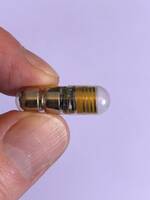
Response: I think its always important to acknowledge that this is a big team effort. We have the teams from MIT, Celero Systems, West Virgnia University (WVU) and Brigham and Women’s Hospital (BWH) all working together on this. For this study, Celero prototyped the devices that we tested in pre-clinical (Swine) models and in a first-in-human study with the team at WVU.
Our lab focuses on the development of ingestible devices for drug delivery and sensing and these have informed the development of these efforts as you can see.
Dr. Traverso[/caption]
Giovanni Traverso MD PhD
Karl Van Tassel (1925) Career Development Professor
Department of Mechanical Engineering
Koch Institute of Integrative Cancer Research
Division of Gastroenterology
Brigham and Women’s Hospital
Harvard Medical School, Boston, MA, USA
MedicalResearch.com: What is the background for this study?
Response: I think its always important to acknowledge that this is a big team effort. We have the teams from MIT, Celero Systems, West Virgnia University (WVU) and Brigham and Women’s Hospital (BWH) all working together on this. For this study, Celero prototyped the devices that we tested in pre-clinical (Swine) models and in a first-in-human study with the team at WVU.
Our lab focuses on the development of ingestible devices for drug delivery and sensing and these have informed the development of these efforts as you can see.

 Lisa-Marie Smale, PharmD
 If you've been in a scrape and your noggin took a knock, playing it tough and shaking it off isn't the way to go.

 Dr. Minneci[/caption]
Peter C. Minneci, MD
Chair of Surgery at Nemours Children’s Health
Delaware Valley
MedicalResearch.com: What is the background for this study? Would you briefly explain the symptoms/course of pilonidal disease?
Response: Pilonidal disease is relatively common and affects up to 1% of the population starting in adolescence and up until young adulthood. Pilonidal disease occurs when cysts or sinuses form between the buttocks. It is believed to be an inflammatory reaction to hair or debris that gets caught in the crease of the buttocks. Risk factors for the condition include a sedentary lifestyle, hygiene and obesity.
[caption id="attachment_61062" align="alignleft" width="150"]
Dr. Minneci[/caption]
Peter C. Minneci, MD
Chair of Surgery at Nemours Children’s Health
Delaware Valley
MedicalResearch.com: What is the background for this study? Would you briefly explain the symptoms/course of pilonidal disease?
Response: Pilonidal disease is relatively common and affects up to 1% of the population starting in adolescence and up until young adulthood. Pilonidal disease occurs when cysts or sinuses form between the buttocks. It is believed to be an inflammatory reaction to hair or debris that gets caught in the crease of the buttocks. Risk factors for the condition include a sedentary lifestyle, hygiene and obesity.
[caption id="attachment_61062" align="alignleft" width="150"] Pilonidal Cyst


 Prof. Durazzo[/caption]
Timothy C. Durazzo, PhD
Clinical Neuropsychologist and Research Scientist
Mental Illness Research and Education Clinical Centers
VA Palo Alto Health Care System
Professor, Department of Psychiatry and Behavioral Sciences
Stanford University School of Medicine
MedicalResearch.com: What is the background for this study?
-There are a limited number of studies investigating changes in human brain structure, in individuals with an alcohol use disorder, with longer term abstinence after treatment.
-Our study was the first to assess for change in cortical thickness over approximately 7 months of abstinence in those seeking treatment of alcohol use disorder.
-Cortical thickness in humans is genetically and phenotypically distinct from other brain structural measures such as cortical volume and surface area.
-Therefore, assessment of changes in cortical thickness with longer-term abstinence provides additional information on how human brain structure recovers with sobriety.
Prof. Durazzo[/caption]
Timothy C. Durazzo, PhD
Clinical Neuropsychologist and Research Scientist
Mental Illness Research and Education Clinical Centers
VA Palo Alto Health Care System
Professor, Department of Psychiatry and Behavioral Sciences
Stanford University School of Medicine
MedicalResearch.com: What is the background for this study?
-There are a limited number of studies investigating changes in human brain structure, in individuals with an alcohol use disorder, with longer term abstinence after treatment.
-Our study was the first to assess for change in cortical thickness over approximately 7 months of abstinence in those seeking treatment of alcohol use disorder.
-Cortical thickness in humans is genetically and phenotypically distinct from other brain structural measures such as cortical volume and surface area.
-Therefore, assessment of changes in cortical thickness with longer-term abstinence provides additional information on how human brain structure recovers with sobriety.

 Dr. Li Li[/caption]
Li Li, M.D., Ph.D., M.P.H.
The Walter M. Seward Professor and Chair of Family Medicine
University of Virginia (UVA) School of Medicine
Director of Population Health at UVA Health
Dr. Li joined the U.S. Preventive Services Task Force in January 2021.
MedicalResearch.com: What is the background for this study? What are the main findings?
Response: Oral health is an important part of everyone’s overall health and well-being. Recognizing this, the Task Force looked at whether primary care clinicians can play a role in complementing the work of dental professionals to prevent cavities and gum disease.
MedicalResearch.com: What are the main findings?
Response: Our review of the latest available evidence focused on the prevention of cavities for children who are 5 years old and older and do not have any signs or symptoms. After a thorough review, we found that there is not enough evidence to recommend for or against oral health screening and interventions for school-aged children in primary care settings.
Dr. Li Li[/caption]
Li Li, M.D., Ph.D., M.P.H.
The Walter M. Seward Professor and Chair of Family Medicine
University of Virginia (UVA) School of Medicine
Director of Population Health at UVA Health
Dr. Li joined the U.S. Preventive Services Task Force in January 2021.
MedicalResearch.com: What is the background for this study? What are the main findings?
Response: Oral health is an important part of everyone’s overall health and well-being. Recognizing this, the Task Force looked at whether primary care clinicians can play a role in complementing the work of dental professionals to prevent cavities and gum disease.
MedicalResearch.com: What are the main findings?
Response: Our review of the latest available evidence focused on the prevention of cavities for children who are 5 years old and older and do not have any signs or symptoms. After a thorough review, we found that there is not enough evidence to recommend for or against oral health screening and interventions for school-aged children in primary care settings.



 Dr. Belloy[/caption]
Michael E. Belloy, PhD
Department of Neurology and Neurological Sciences
Stanford University, Stanford, California
MedicalResearch.com: What is the background for this study?
Response: Apolipoprotein E (APOE)*2 and APOE*4 are, respectively, the strongest protective and risk-increasing, genetic variants for late-onset Alzheimer disease. As such, one’s APOE genotype is highly relevant towards clinical trial design and Alzheimer’s disease research. However, most insights so far are focused on the associations of these APOE genotypes with Alzheimer’s disease risk in non-Hispanic white individuals.
One important aspect of our work is that we really increased sample sizes for non-Hispanic Black, Hispanic, and East Asian individuals, so that we now have better understanding of the associations of APOE genotypes with Alzheimer’s disease risk in these groups. In complement, we also did the largest investigation to date on the role of ancestry on the associations of APOE genotypes with Alzheimer’s disease risk. The scale of our study was thus a critical factor in generating novel insights.
Dr. Belloy[/caption]
Michael E. Belloy, PhD
Department of Neurology and Neurological Sciences
Stanford University, Stanford, California
MedicalResearch.com: What is the background for this study?
Response: Apolipoprotein E (APOE)*2 and APOE*4 are, respectively, the strongest protective and risk-increasing, genetic variants for late-onset Alzheimer disease. As such, one’s APOE genotype is highly relevant towards clinical trial design and Alzheimer’s disease research. However, most insights so far are focused on the associations of these APOE genotypes with Alzheimer’s disease risk in non-Hispanic white individuals.
One important aspect of our work is that we really increased sample sizes for non-Hispanic Black, Hispanic, and East Asian individuals, so that we now have better understanding of the associations of APOE genotypes with Alzheimer’s disease risk in these groups. In complement, we also did the largest investigation to date on the role of ancestry on the associations of APOE genotypes with Alzheimer’s disease risk. The scale of our study was thus a critical factor in generating novel insights.


 Dr. Gaba[/caption]
Prakriti Gaba, MD
Cardiovascular Medicine Fellow
Brigham and Women's Hospital
[caption id="attachment_31114" align="alignleft" width="120"]
Dr. Gaba[/caption]
Prakriti Gaba, MD
Cardiovascular Medicine Fellow
Brigham and Women's Hospital
[caption id="attachment_31114" align="alignleft" width="120"] Dr. Deepak Bhatt[/caption]
Deepak L. Bhatt MD MPH
Director of Mount Sinai Fuster Heart Hospital
Dr. Valentin Fuster Professor of Cardiovascular Medicine
Icahn School of Medicine at Mount Sinai
MedicalResearch.com: What is the background for this study?
Response: Accurate classification of acute myocardial infarction is instrumental for the appropriate diagnosis and effective management of patients suffering from this widely prevalent cardiovascular condition.
In the past, there have been a variety of clinical scores published to advise clinicians on the best classifications schemes for patients with acute MI. These have included the Thrombolysis in Myocardial Infarction (TIMI) risk score, the HEART score, and the Killip classification. The strength of these traditional scores includes their practicality, as they can be implemented at the bedside to rapidly assist with prognostication. Nonetheless, as technologic advancements have made imaging and tissue identification more accessible, national and international committees are looking to revise traditional classification schemes of acute MI with novel ones leveraging multimodal approaches.
Dr. Deepak Bhatt[/caption]
Deepak L. Bhatt MD MPH
Director of Mount Sinai Fuster Heart Hospital
Dr. Valentin Fuster Professor of Cardiovascular Medicine
Icahn School of Medicine at Mount Sinai
MedicalResearch.com: What is the background for this study?
Response: Accurate classification of acute myocardial infarction is instrumental for the appropriate diagnosis and effective management of patients suffering from this widely prevalent cardiovascular condition.
In the past, there have been a variety of clinical scores published to advise clinicians on the best classifications schemes for patients with acute MI. These have included the Thrombolysis in Myocardial Infarction (TIMI) risk score, the HEART score, and the Killip classification. The strength of these traditional scores includes their practicality, as they can be implemented at the bedside to rapidly assist with prognostication. Nonetheless, as technologic advancements have made imaging and tissue identification more accessible, national and international committees are looking to revise traditional classification schemes of acute MI with novel ones leveraging multimodal approaches.

 Dr. Mallbris[/caption]
Lotus Mallbris, M.D., Ph.D.,
Senior Vice President of Immunology Development
Dr. Mallbris[/caption]
Lotus Mallbris, M.D., Ph.D.,
Senior Vice President of Immunology Development
 Dr. Dubinsky[/caption]
Marla C. Dubinsky, MD
Professor of Pediatrics and Medicine
Icahn School of Medicine at Mount Sinai
Co- director, Susan and Leonard Feinstein IBD Clinical Center
Mount Sinai Health System
MedicalResearch.com: What is the background for this study? Would you briefly describe the condition of UC?
Response: Lucent 1 and Lucent 2 were the induction and maintenance registration trials studying the efficacy and safety of mirikizumab in patients 18 years and older with moderate to severely active ulcerative colitis. Mirikizumab is a monoclonal antibody targeting the p19 subunit of IL23. Lucent-3 is the open label extension arm for those meeting inclusion criteria after completing Lucent 2. This study evaluated the long term efficacy and safety of mirikizumab in patients with ulcerative colitis who completed a total of 104 weeks of active mirikizumab treatment.
Ulcerative colitis is a chronic incurable inflammatory condition of colon. Common symptoms include diarrhea, blood in the stool, abdominal cramping and bowel urgency. Bowel urgency is one of the most burdensome symptoms that a patient with you could experience.
Dr. Dubinsky[/caption]
Marla C. Dubinsky, MD
Professor of Pediatrics and Medicine
Icahn School of Medicine at Mount Sinai
Co- director, Susan and Leonard Feinstein IBD Clinical Center
Mount Sinai Health System
MedicalResearch.com: What is the background for this study? Would you briefly describe the condition of UC?
Response: Lucent 1 and Lucent 2 were the induction and maintenance registration trials studying the efficacy and safety of mirikizumab in patients 18 years and older with moderate to severely active ulcerative colitis. Mirikizumab is a monoclonal antibody targeting the p19 subunit of IL23. Lucent-3 is the open label extension arm for those meeting inclusion criteria after completing Lucent 2. This study evaluated the long term efficacy and safety of mirikizumab in patients with ulcerative colitis who completed a total of 104 weeks of active mirikizumab treatment.
Ulcerative colitis is a chronic incurable inflammatory condition of colon. Common symptoms include diarrhea, blood in the stool, abdominal cramping and bowel urgency. Bowel urgency is one of the most burdensome symptoms that a patient with you could experience.



 Prof. Takeshi[/caption]
Prof. Takeshi Asai
Faculty of Health and Sports Sciences, University of Tsukuba,
Tsukuba Japan
Faculty of Physical Education, International Pacific University
Okayama, Japan
MedicalResearch.com: What is the background for this study?
Response: In the early stages of the COVID-19 pandemic, contact and droplet transmission were considered the main routes of infection. However, it was later demonstrated that airborne transmission is an important route. Therefore, accumulating real-world data on airborne transmission was deemed crucial.
Prof. Takeshi[/caption]
Prof. Takeshi Asai
Faculty of Health and Sports Sciences, University of Tsukuba,
Tsukuba Japan
Faculty of Physical Education, International Pacific University
Okayama, Japan
MedicalResearch.com: What is the background for this study?
Response: In the early stages of the COVID-19 pandemic, contact and droplet transmission were considered the main routes of infection. However, it was later demonstrated that airborne transmission is an important route. Therefore, accumulating real-world data on airborne transmission was deemed crucial.

 Dr. Harmer[/caption]
Peter A. Harmer, PhD, MPH, AT-Ret, FACSM
Senior Associate Research Scientist
Oregon Research Institute
MedicalResearch.com: What is the background for this study?
Response: Decline in various aspects of cognitive function, such as memory, executive function, and multitasking ability is common as we age. The rate and extent of decline varies among older adults but approximately 20% of those aged 65+ will experience clinically relevant mild cognitive impairment, which places them at increased risk of progressing to Alzheimer’s disease or related dementias. It is also associated with decreased mobility, increased risk of falls and impaired capacity for complex activities of daily living.
Dr. Harmer[/caption]
Peter A. Harmer, PhD, MPH, AT-Ret, FACSM
Senior Associate Research Scientist
Oregon Research Institute
MedicalResearch.com: What is the background for this study?
Response: Decline in various aspects of cognitive function, such as memory, executive function, and multitasking ability is common as we age. The rate and extent of decline varies among older adults but approximately 20% of those aged 65+ will experience clinically relevant mild cognitive impairment, which places them at increased risk of progressing to Alzheimer’s disease or related dementias. It is also associated with decreased mobility, increased risk of falls and impaired capacity for complex activities of daily living.
 Dr. Han[/caption]
Summer S Han, PhD
Associate Professor
Dr. Han[/caption]
Summer S Han, PhD
Associate Professor
 Dr. Choi[/caption]
Dr. Eunji Choi PhD
Instructor, Neurosurgery
Department: Adult Neurosurgery
Stanford University School of Medicine
MedicalResearch.com: What is the background for this study?
Dr. Choi[/caption]
Dr. Eunji Choi PhD
Instructor, Neurosurgery
Department: Adult Neurosurgery
Stanford University School of Medicine
MedicalResearch.com: What is the background for this study?




 Dr. Sood[/caption]
Neeraj Sood, PhD
Verna and Peter Dauterive Hall
University Park Campus
University of Southern California
Los Angeles, CA
MedicalResearch.com: What is the background for this study? What are the main findings?
Response: We conducted this study to inform school COVID-19 policies.
The main findings are that the median duration of infectivity after a positive COVID-19 test in children is 3 days. The median duration of infectivity does not vary with vaccination.
Dr. Sood[/caption]
Neeraj Sood, PhD
Verna and Peter Dauterive Hall
University Park Campus
University of Southern California
Los Angeles, CA
MedicalResearch.com: What is the background for this study? What are the main findings?
Response: We conducted this study to inform school COVID-19 policies.
The main findings are that the median duration of infectivity after a positive COVID-19 test in children is 3 days. The median duration of infectivity does not vary with vaccination.