MedicalResearch.com Interview with:
[caption id="attachment_30252" align="alignleft" width="133"]

Dr. Kenji Tanimura[/caption]
Dr. Kenji Tanimura M.D., Ph.D.
Assistant professor
Division of Obstetrics and Gynecology
Graduate School of Medicine and
Hideto Yamada M.D., Ph.D.
Professor and Chairman Department of Obstetrics and Gynecology
Kobe University Graduate School of Medicine
MedicalResearch.com: What is the background for this study?
Response: Congenital cytomegalovirus (CMV) infection can cause long-term neurological sequelae, such as hearing difficulties and mental retardations, in affected children. Some investigators reported that early diagnosis and antiviral therapy can improve neurological outcomes in symptomatic congenital infected infants. However, universal screening of newborns for congenital CMV infection is not yet available. Therefore, the development of non-invasive methods for prenatal detection of mothers and newborns at high risk for congenital CMV infection has been desired.
We aimed to determine maternal clinical, laboratory, and ultrasound findings that effectively predict the occurrence of congenital CMV infection in high-risk pregnant women, who were positive for CMV IgM.
We performed maternal blood screening for CMV IgG and IgM, and 300 IgM-positive pregnant women, including 22 with congenital CMV infection, received series of examinations. We evaluated maternal clinical and laboratory findings, including serum CMV IgM and IgG, IgG avidity index, antigenemia testing, and CMV-DNA PCR for the maternal serum, urine, and uterine cervical secretion, and prenatal ultrasound findings.

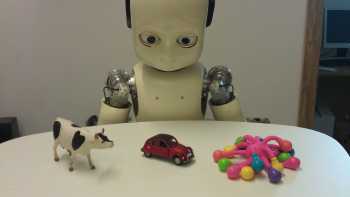 Humanoid Robot Helps Understand How Toddlers Link Words to Objects[/caption]
Dr Katie (Katherine) Twomey
ESRC Future Research Leaders Fellow, Lancaster University
Senior Research Associate, ESRC International Centre for Language and Communicative Development (LuCiD)
MedicalResearch.com: What is the background for this study? What are the main findings?
Response: Although we know that toddlers can quickly work out what new words mean, it's not yet clear exactly how they do it. For example, when they see a new object alongside their favorite toy truck and hear a new word "block", we know that they will link "block" to the new object. They could do this by thinking in detail about what they already know, for example "if my toy is called "truck", then "block" must be the name of the new object". Equally, however, they could quickly link the new word to the new object without thinking about it in-depth.
We tested this second possibility using iCub, a humanoid robot which learns by making quick associations between what it sees and what it hears, without the ability to think in detail about what it already knows. We replicated two studies of toddlers' early word learning with iCub and found that even though it can only learn through making simple links between words and objects, it behaved exactly as children did in the original experiments.
Humanoid Robot Helps Understand How Toddlers Link Words to Objects[/caption]
Dr Katie (Katherine) Twomey
ESRC Future Research Leaders Fellow, Lancaster University
Senior Research Associate, ESRC International Centre for Language and Communicative Development (LuCiD)
MedicalResearch.com: What is the background for this study? What are the main findings?
Response: Although we know that toddlers can quickly work out what new words mean, it's not yet clear exactly how they do it. For example, when they see a new object alongside their favorite toy truck and hear a new word "block", we know that they will link "block" to the new object. They could do this by thinking in detail about what they already know, for example "if my toy is called "truck", then "block" must be the name of the new object". Equally, however, they could quickly link the new word to the new object without thinking about it in-depth.
We tested this second possibility using iCub, a humanoid robot which learns by making quick associations between what it sees and what it hears, without the ability to think in detail about what it already knows. We replicated two studies of toddlers' early word learning with iCub and found that even though it can only learn through making simple links between words and objects, it behaved exactly as children did in the original experiments.