MedicalResearch.com Interview with:
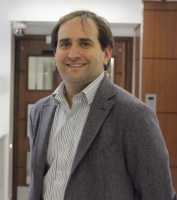
[caption id="attachment_50664" align="alignleft" width="125"]

Prof. Satchi-Fainaro[/caption]
Prof. Ronit Satchi-Fainaro, PhD
Head, Cancer Research and Nanomedicine Laboratory
Department of Physiology and Pharmacology,
Sackler Faculty of Medicine,
Tel Aviv University,
Tel-Aviv 69978, Israel
[caption id="attachment_50670" align="alignleft" width="116"]

Prof. Florindo[/caption]
Prof. Helena Florindo, PhD
Head, BioNanoSciences – iMed.ULisboa
Faculty of Pharmacy,
University of Lisbon
Lisbon, Portugal
MedicalResearch.com: What are the main findings?
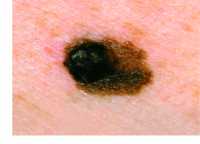
Response: The war against cancer in general, and melanoma in particular, has advanced over the years through a variety of treatment modalities, such as surgery, chemotherapy, radiation therapy and immunotherapy. The immune checkpoint inhibitors brought a breakthrough solution for advanced melanoma patients, but only a low percentage of those respond to this therapy, developing resistance and being affected by severe side effects. Despite the success of several vaccines against viral diseases, this success has not been materialized yet against cancer.
This study led by my lab at Tel Aviv University, and Helena Florindo’s lab at the University of Lisbon, describes the development of an effective nano-vaccine against melanoma, that also sensitizes the immune system to immunotherapies.
This nano-vaccine prevented melanoma, and also led to remarkable tumor inhibition and prolonged survival in mice already affected by this disease.



















 Prof Ching-Chi Chi,[/caption]
Prof Ching-Chi Chi, MD, MMS, DPhil (Oxford)
Department of Dermatology
Chang Gung Memorial Hospital, Linkou
Taiwan
MedicalResearch.com: What is the background for this study?
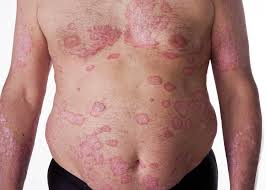
Response: Psoriasis has been associated various inflammatory comorbidities including diabetes mellitus, coronary artery disease, etc. Moreover, obesity is prevalent among psoriasis patients and has been considered as an independent risk factor for occurrence and worsening of psoriasis by promoting systemic inflammation.
Notably, body weight (BW) gain of psoriasis patients after biologics use has been observed. However, there are inconsistent reports on whether biological therapy relates to BW gain.
Prof Ching-Chi Chi,[/caption]
Prof Ching-Chi Chi, MD, MMS, DPhil (Oxford)
Department of Dermatology
Chang Gung Memorial Hospital, Linkou
Taiwan
MedicalResearch.com: What is the background for this study?
Response: Psoriasis has been associated various inflammatory comorbidities including diabetes mellitus, coronary artery disease, etc. Moreover, obesity is prevalent among psoriasis patients and has been considered as an independent risk factor for occurrence and worsening of psoriasis by promoting systemic inflammation.
Notably, body weight (BW) gain of psoriasis patients after biologics use has been observed. However, there are inconsistent reports on whether biological therapy relates to BW gain. 




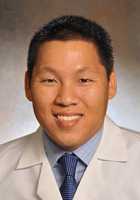


 Dr. Gery Guy[/caption]
Gery P. Guy Jr., PhD, MPH
Senior Health Economist
Division of Unintentional Injury Prevention
CDC
MedicalResearch.com: What is the background for this study?
Response: In 2017, among the 70,237 drug overdose deaths in the United States, 47,600 (67.8%) involved prescription or illicit opioids. Distribution of the opioid receptor antagonist naloxone to reverse overdose is a key part of the public health response to the opioid overdose epidemic. The 2016 CDC Guideline for Prescribing Opioids for Chronic Pain recommended clinicians consider offering naloxone when overdose risk factors, such as history of overdose or opioid use disorder, higher opioid dosages, or concurrent benzodiazepine use, are present.
However, recent analyses examining pharmacy-based naloxone dispensing are lacking. To address this gap and to inform future overdose prevention and response efforts, CDC examined trends and characteristics of naloxone dispensed from retail pharmacies at the national and county level in the United States.
Dr. Gery Guy[/caption]
Gery P. Guy Jr., PhD, MPH
Senior Health Economist
Division of Unintentional Injury Prevention
CDC
MedicalResearch.com: What is the background for this study?
Response: In 2017, among the 70,237 drug overdose deaths in the United States, 47,600 (67.8%) involved prescription or illicit opioids. Distribution of the opioid receptor antagonist naloxone to reverse overdose is a key part of the public health response to the opioid overdose epidemic. The 2016 CDC Guideline for Prescribing Opioids for Chronic Pain recommended clinicians consider offering naloxone when overdose risk factors, such as history of overdose or opioid use disorder, higher opioid dosages, or concurrent benzodiazepine use, are present.
However, recent analyses examining pharmacy-based naloxone dispensing are lacking. To address this gap and to inform future overdose prevention and response efforts, CDC examined trends and characteristics of naloxone dispensed from retail pharmacies at the national and county level in the United States.






 Upekha Liyanage[/caption]
Upekha Liyanage MBBS | PhD Student
School of Medicine | University of Queensland
Statistical Genetics Laboratory
QIMR Berghofer Medical Research Institute
MedicalResearch.com: What is the background for this study? What types of skin cancers are linked to these genes?
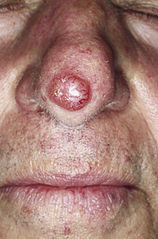
Response: Basal cell carcinoma (BCC) and squamous cell carcinoma (SCC) collectively referred to as “keratinocyte cancers” are the commonest forms of cancers of the skin. Although these cancers are less aggressive than melanoma, due to their large numbers, they pose a significant burden to the healthcare expenditure. Also, these cancers are relatively understudied when compared with melanoma. Notably, BCC and SCC are not routinely reported in cancer registries. In Australia, Medicare data are used to estimate the incidence and costs associated with these cancers. Expenditure in Australia for the diagnosis, treatment and pathology, almost exceeds $700 million for both BCC and squamous cell carcinoma. In Unites States, the average annual cost for skin cancer including melanoma is approximately $8.1 billion.
Previous research has led to identification of 29 BCC and 11 squamous cell carcinoma genetic risk variants and 7 of them overlap with both BCC and SCC risk. So, to strengthen the preventive efforts and to reveal new therapeutics, it is very timely and critical to explore more on the genetic susceptibility of these deadly cancers. We analysed ~48,000 cancer cases with ~630,000 skin cancer free controls from European ancestry population in Australia, UK and USA.
Upekha Liyanage[/caption]
Upekha Liyanage MBBS | PhD Student
School of Medicine | University of Queensland
Statistical Genetics Laboratory
QIMR Berghofer Medical Research Institute
MedicalResearch.com: What is the background for this study? What types of skin cancers are linked to these genes?
Response: Basal cell carcinoma (BCC) and squamous cell carcinoma (SCC) collectively referred to as “keratinocyte cancers” are the commonest forms of cancers of the skin. Although these cancers are less aggressive than melanoma, due to their large numbers, they pose a significant burden to the healthcare expenditure. Also, these cancers are relatively understudied when compared with melanoma. Notably, BCC and SCC are not routinely reported in cancer registries. In Australia, Medicare data are used to estimate the incidence and costs associated with these cancers. Expenditure in Australia for the diagnosis, treatment and pathology, almost exceeds $700 million for both BCC and squamous cell carcinoma. In Unites States, the average annual cost for skin cancer including melanoma is approximately $8.1 billion.
Previous research has led to identification of 29 BCC and 11 squamous cell carcinoma genetic risk variants and 7 of them overlap with both BCC and SCC risk. So, to strengthen the preventive efforts and to reveal new therapeutics, it is very timely and critical to explore more on the genetic susceptibility of these deadly cancers. We analysed ~48,000 cancer cases with ~630,000 skin cancer free controls from European ancestry population in Australia, UK and USA.