MedicalResearch.com Interview with:
[caption id="attachment_51798" align="alignleft" width="200"]

Dr. Burgel[/caption]
Pierre-Régis Burgel MD, PhD
Professor of Respiratory Medicine
French National Reference Center for Cystic Fibrosis (coordinator)
Cochin Hospital and Paris Descartes University
Paris, France
MedicalResearch.com: What is the background for this study? How does lumacaftor-ivacaftor differ from other treatments for CF?
Response: Cystic fibrosis (CF) is a genetic disease caused by mutations in the gene encoding for the cystic fibrosis transmembrane conductance regulator (CFTR) protein, which acts as a chloride and bicarbonate ion channel across many epithelia. Defective ion transport leads to multiple organ dysfunction, but airway involvement (related to mucus plugging and infection) and malnutrition are among the most important prognostic factors in patients with CF. Over the past decades, symptomatic treatment, including inhaled and systemic antibiotics, nutritional support, pancreatic enzyme replacement, and specialized center care organization have led to major prognostic improvement. More recently, mutation-specific small molecules targeting defective CFTR have been shown to partly restore ion transport in epithelia, which translated into clinical benefits.
Phe508del is the most common
CFTR mutation with approximately 70% of patients with cystic fibrosis carrying one Phe508del mutation and 40-50% of patients being homozygous for this mutation. Safety and efficacy of lumacaftor-ivacaftor, which partially restores CFTR function, have been reported in phase 3 clinical trials in patients 12 years of age or older who had CF and were homozygous for the Phe508del. Improvement in lung function, reduction in pulmonary exacerbations and a trend towards an increase in body mass index (BMI) led to its approval by the Food and Drug Administration in February 2015 and by the European Medicines Agency in November 2015. However, the magnitude of effect on percent predicted forced expiratory volume in 1 sec (ppFEV
1), the small improvement in nutritional status and the limited use of concomitant treatment for reducing exacerbations have cast doubt on the clinical benefits associated with lumacaftor-ivacaftor, which has not been approved in several countries.
The present study is a multicenter (n=47 centers) observational post-marketing study aimed at evaluating the effects of lumacaftor-ivacaftor treatment in a real-life setting in France. All patients who initiated lumacaftor-ivacaftor in 2016 in the French cystic fibrosis reference network, which comprises 47 pediatric and/or adult centers, was performed. Our goal was to examine its safety and effectiveness over the first year of treatment in a large, unselected, population of adolescents (≥12 years) and adults (≥18 years) with CF and Phe508del homozygous mutations.










 Dr. Helen Marsden PhD
Skin Analytics Limited
London, United Kingdom
MedicalResearch.com: What is the background for this study?
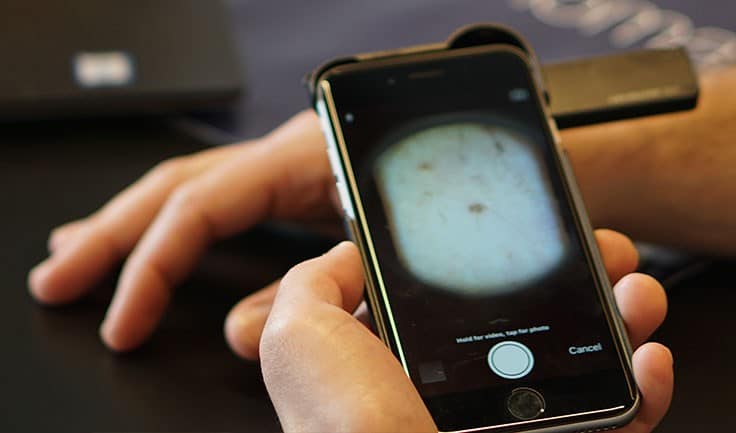
Response: In this technology age, with the explosion of interest and applications using Artificial Intelligence, it is easy to accept the output of a technology-based test - such as a smartphone app designed to identify skin cancer - without thinking too much about it. In reality, technology is only as good as the way it has been developed, tested and validated. In particular, AI algorithms are prone to a lack of “generalisation” - i.e. their performance drops when presented with data it has not seen before. In the medical field, and particularly in areas where AI is being developed to direct a patient’s diagnosis or care, this is particularly problematic. Inappropriate diagnosis or advice to patients can lead to false reassurance, heightened concern and pressure on NHS services, or worse. It is concerning, therefore, that there are a large number of smartphone apps available that provide an assessment of skin lesions, including some that provide an estimate of the probability of malignancy, that have not been assessed for diagnostic accuracy.
Skin Analytics has developed an AI-based algorithm, named: Deep Ensemble for Recognition of Malignancy (DERM), for use as a decision support tool for healthcare providers. DERM determines the likelihood of skin cancer from dermoscopic images of skin lesions. It was developed using deep learning techniques that identify and assess features of these lesions which are associated with melanoma, using over 7,000 archived dermoscopic images. Using these images, it was shown to identify melanoma with similar accuracy to specialist physicians. However, to prove the algorithm could be used in a real life clinical setting, Skin Analytics set out to conduct a clinical validation study.
Dr. Helen Marsden PhD
Skin Analytics Limited
London, United Kingdom
MedicalResearch.com: What is the background for this study?
Response: In this technology age, with the explosion of interest and applications using Artificial Intelligence, it is easy to accept the output of a technology-based test - such as a smartphone app designed to identify skin cancer - without thinking too much about it. In reality, technology is only as good as the way it has been developed, tested and validated. In particular, AI algorithms are prone to a lack of “generalisation” - i.e. their performance drops when presented with data it has not seen before. In the medical field, and particularly in areas where AI is being developed to direct a patient’s diagnosis or care, this is particularly problematic. Inappropriate diagnosis or advice to patients can lead to false reassurance, heightened concern and pressure on NHS services, or worse. It is concerning, therefore, that there are a large number of smartphone apps available that provide an assessment of skin lesions, including some that provide an estimate of the probability of malignancy, that have not been assessed for diagnostic accuracy.
Skin Analytics has developed an AI-based algorithm, named: Deep Ensemble for Recognition of Malignancy (DERM), for use as a decision support tool for healthcare providers. DERM determines the likelihood of skin cancer from dermoscopic images of skin lesions. It was developed using deep learning techniques that identify and assess features of these lesions which are associated with melanoma, using over 7,000 archived dermoscopic images. Using these images, it was shown to identify melanoma with similar accuracy to specialist physicians. However, to prove the algorithm could be used in a real life clinical setting, Skin Analytics set out to conduct a clinical validation study.

 Dr. Qing Chen[/caption]
Qing Chen, M.D., Ph.D.
Assistant Professor, Immunology, Microenvironment & Metastasis Program
Scientific Director, Imaging Facility
The Wistar Institute
MedicalResearch.com: What is the background for this study?
Response: We are focusing on how a specific type of brain cells, astrocytes, helps the cancer cells from melanoma and breast cancer to form metastatic lesions.
Dr. Qing Chen[/caption]
Qing Chen, M.D., Ph.D.
Assistant Professor, Immunology, Microenvironment & Metastasis Program
Scientific Director, Imaging Facility
The Wistar Institute
MedicalResearch.com: What is the background for this study?
Response: We are focusing on how a specific type of brain cells, astrocytes, helps the cancer cells from melanoma and breast cancer to form metastatic lesions.



 Dr. Perumalswami[/caption]
Chithra R. Perumalswami, MD, MSc
Research Fellow
Center for Bioethics & Social Sciences in Medicine
University of Michigan
[caption id="attachment_51839" align="alignleft" width="133"]
Dr. Perumalswami[/caption]
Chithra R. Perumalswami, MD, MSc
Research Fellow
Center for Bioethics & Social Sciences in Medicine
University of Michigan
[caption id="attachment_51839" align="alignleft" width="133"]






 Ruibin Lu
Assistant Professor of Criminal Justice
Stockton University
Absecon, New Jersey
MedicalResearch.com: What is the background for this study?
Response: We are witnessing a trend of legalizing marijuana in the United States and in the world. Many states have either legalized recreational marijuana or are considering it. At the same time, there are concerns about what will happen to our society if weed is legal. One of the concerns is about crime rates: are we going to experience more or fewer crimes after legalizing recreational marijuana? This is a legitimate question that we should consider when making cannabis-related public policies. Our research provides a preliminary answer to this question. It analyzes crime rates before and after the legalization using rigorous scientific methods and provides more information on how marijuana legalization may affect crime rates.
Ruibin Lu
Assistant Professor of Criminal Justice
Stockton University
Absecon, New Jersey
MedicalResearch.com: What is the background for this study?
Response: We are witnessing a trend of legalizing marijuana in the United States and in the world. Many states have either legalized recreational marijuana or are considering it. At the same time, there are concerns about what will happen to our society if weed is legal. One of the concerns is about crime rates: are we going to experience more or fewer crimes after legalizing recreational marijuana? This is a legitimate question that we should consider when making cannabis-related public policies. Our research provides a preliminary answer to this question. It analyzes crime rates before and after the legalization using rigorous scientific methods and provides more information on how marijuana legalization may affect crime rates.