MedicalResearch.com Interview with:
[caption id="attachment_52264" align="alignleft" width="174"]

Dr. Woolf[/caption]
Steven H. Woolf, MD, MPH
Director Emeritus and Senior Advisor, Center on Society and Health
Professor, Department of Family Medicine and Population Health
C. Kenneth and Dianne Wright Distinguished Chair in Population Health and Health Equity
Virginia Commonwealth University School of Medicine
Richmond, Virginia 23298-0212
MedicalResearch.com: What is the background for this study? What are the main findings?
Response: Life expectancy in the US has decreased for three years in a row, the first time this has occurred in this country since the Spanish flu epidemic a century ago. Meanwhile, life expectancy in other countries continues to climb.
Our study found that the trend is being driven by an increase in death rates among working-age adults (ages 25-64 years), which began as early as the 1990s. The increase has involved deaths from drug overdoses—a major contributor—but also from alcoholism, suicides, and a long list of organ diseases. We found increases in 35 causes of death.
We analyzed the trends across the 50 states and discovered that the trend is concentrated in certain regions, especially the Industrial Midwest (Rust Belt) and Appalachia, whereas other regions like the Pacific states were least affected. Increases in midlife mortality in four Ohio Valley states (Ohio, Pennsylvania, Indiana and Kentucky) accounted for one third of the excess deaths between 2010 and 2017.



 Dr. Crombie[/caption]
Dr. Jennifer Crombie MD
Instructor in Medicine
Harvard Medical School
MedicalResearch.com: What is the background for this study?
Response: New data from our investigator-sponsored Phase 1 study exploring duvelisib in combination with venetoclax will be presented at ASH on December 7. In relapsed or refractory chronic lymphocytic leukemia/small lymphocytic lymphoma (CLL/SLL), duvelisib plus venetoclax demonstrated promising clinical activity, a manageable tolerability profile, and identified a recommended Phase 2 dosing (RP2D) regimen.
Dr. Crombie[/caption]
Dr. Jennifer Crombie MD
Instructor in Medicine
Harvard Medical School
MedicalResearch.com: What is the background for this study?
Response: New data from our investigator-sponsored Phase 1 study exploring duvelisib in combination with venetoclax will be presented at ASH on December 7. In relapsed or refractory chronic lymphocytic leukemia/small lymphocytic lymphoma (CLL/SLL), duvelisib plus venetoclax demonstrated promising clinical activity, a manageable tolerability profile, and identified a recommended Phase 2 dosing (RP2D) regimen. 

























 Dr. Wheeler[/caption]
Ben Wheeler,MB ChB(Otago) DCH PhD CCE FRACP
Paediatrician, Associate
Department of Women's and Children's Health (Dunedin)
University of Otag
MedicalResearch.com: What is the background for this study?
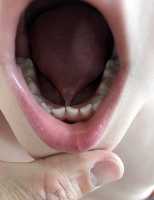
Response: All tongues have a frenulum, which is a small band of tissue that helps connect them to the floor of the mouth. Tongue tie (or ankyloglossia) is when this frenulum causes restriction to the movement of the tongue, and can interfere with successful breastfeeding in infants. This may be improved with an operation to cut the frenulum of the tongue (frenotomy). Internationally, tongue-tie diagnosis and treatment has increased substantially (reported at over 10-15% in some locations). This has led to growing concerns of potential overtreatment. The surgical treatment is often discussed as a minor surgery with little risk, but there is growing awareness this may not be the case. There is a paucity of studies examining moderate to severe complications following frenotomy.
Therefore we aimed to determine rates of moderate to severe complications of tongue tie procedures presenting to hospital-based paediatricians in New Zealand, and describe this population.
Dr. Wheeler[/caption]
Ben Wheeler,MB ChB(Otago) DCH PhD CCE FRACP
Paediatrician, Associate
Department of Women's and Children's Health (Dunedin)
University of Otag
MedicalResearch.com: What is the background for this study?
Response: All tongues have a frenulum, which is a small band of tissue that helps connect them to the floor of the mouth. Tongue tie (or ankyloglossia) is when this frenulum causes restriction to the movement of the tongue, and can interfere with successful breastfeeding in infants. This may be improved with an operation to cut the frenulum of the tongue (frenotomy). Internationally, tongue-tie diagnosis and treatment has increased substantially (reported at over 10-15% in some locations). This has led to growing concerns of potential overtreatment. The surgical treatment is often discussed as a minor surgery with little risk, but there is growing awareness this may not be the case. There is a paucity of studies examining moderate to severe complications following frenotomy.
Therefore we aimed to determine rates of moderate to severe complications of tongue tie procedures presenting to hospital-based paediatricians in New Zealand, and describe this population.