MedicalResearch.com Interview with:
[caption id="attachment_53477" align="alignleft" width="200"]

Dr. Wallach[/caption]
Joshua D. Wallach, MS, PhD
Assistant Professor of Epidemiology (Environmental Health Sciences)
Yale School of Public Health
New Haven, CT
MedicalResearch.com: What is the background for this study?
Response: Over the past few years, there has been growing interest in the potential health benefits of cannabidiol (CBD), a chemical compound in cannabis. Although only one CBD-derived prescription drug has been approved by the US Food and Drug Administration (FDA) for the treatment of epilepsy, I recently started seeing products containing CBD advertised and sold across the US (e.g. CBD in foods, beverages, dietary supplements, and cosmetics). I noticed that many of these products were being marketed with unproven claims to prevent, cure, and treat various conditions, and became interested in learning more about the research supporting the use of CBD, the potential for misleading claims, and impact that the CBD-industry may be having on research that is being generated and disseminated to the public.
Research funding sources and other author conflicts of interests (e.g. consulting fees, honoraria, travel expenses) can influence the way that research is designed, conducted, and reported. Previous studies have consistently demonstrated associations between authors' conflicts of interest and proindustry conclusions in clinical research.
Given the growing number of companies invested in CBD's commercial success, we decided to analyze the disclosed funding sources, conflicts of interest statements, author employment details, and CBD-related conclusions in a large sample of published articles on the characteristics, use, and therapeutic effects of cannabidiol.


 Dr. Selvin[/caption]
Elizabeth Selvin, PhD, MPH
Professor of Epidemiology & Medicine
Director, Cardiovascular and Clinical Epidemiology
Department of Epidemiology
Welch Center for Prevention, Epidemiology and Clinical Research and the
Johns Hopkins Bloomberg School of Public Health
MedicalResearch.com: What is the background for this study?
Response: The best approach to diabetes management in older adults is unclear. A new blood test called high-sensitivity troponin can detect damage to the heart, even in people without any signs or symptoms of heart disease.
Dr. Selvin[/caption]
Elizabeth Selvin, PhD, MPH
Professor of Epidemiology & Medicine
Director, Cardiovascular and Clinical Epidemiology
Department of Epidemiology
Welch Center for Prevention, Epidemiology and Clinical Research and the
Johns Hopkins Bloomberg School of Public Health
MedicalResearch.com: What is the background for this study?
Response: The best approach to diabetes management in older adults is unclear. A new blood test called high-sensitivity troponin can detect damage to the heart, even in people without any signs or symptoms of heart disease.



 Dr. Jeffrey Smith[/caption]
Jeffrey R. Smith, MD PhD
Department of Medicine, Division of Genetic Medicine
Vanderbilt-Ingram Cancer Center, and Vanderbilt Genetics Institute
Vanderbilt University Medical Center
Medical Research Service
Tennessee Valley Healthcare System, Veterans Administration
Nashville, TN
MedicalResearch.com: What is the background for this study?
Response: Roughly 20% of men with prostate cancer have a family history of the disease, and 5% meet criteria for hereditary prostate cancer. Although prostate cancer has the greatest heritability of all common cancers (twice that of breast cancer), extensive heterogeneity of its inherited causes has presented a considerable obstacle for traditional pedigree-based genetic investigative approaches. Inherited causes across, as well as within families are diverse.
This study introduced a new familial case-control study design that uses extent of family history as a proxy for genetic burden. It compared a large number of men with prostate cancer, each from a separate family with a strong history of the disease, to screened men with no personal or family history. The study comprehensively deconstructs how the 8q24 chromosomal region impacts risk of hereditary prostate cancer, introducing several new analytical approaches. The locus had been known to alter risk of prostate, breast, colon, ovarian, and numerous additional cancers.
Dr. Jeffrey Smith[/caption]
Jeffrey R. Smith, MD PhD
Department of Medicine, Division of Genetic Medicine
Vanderbilt-Ingram Cancer Center, and Vanderbilt Genetics Institute
Vanderbilt University Medical Center
Medical Research Service
Tennessee Valley Healthcare System, Veterans Administration
Nashville, TN
MedicalResearch.com: What is the background for this study?
Response: Roughly 20% of men with prostate cancer have a family history of the disease, and 5% meet criteria for hereditary prostate cancer. Although prostate cancer has the greatest heritability of all common cancers (twice that of breast cancer), extensive heterogeneity of its inherited causes has presented a considerable obstacle for traditional pedigree-based genetic investigative approaches. Inherited causes across, as well as within families are diverse.
This study introduced a new familial case-control study design that uses extent of family history as a proxy for genetic burden. It compared a large number of men with prostate cancer, each from a separate family with a strong history of the disease, to screened men with no personal or family history. The study comprehensively deconstructs how the 8q24 chromosomal region impacts risk of hereditary prostate cancer, introducing several new analytical approaches. The locus had been known to alter risk of prostate, breast, colon, ovarian, and numerous additional cancers. 

















 Adawiyah Jami[/caption]
Adawiyah Jamil, AdvMDerm
Associate Professor at Department of Medicine
University Kebangsaan Malaysia Medical Center
Kuala Lumpur, Malaysia
MedicalResearch.com: What is the background for this study?
Response: We commonly observed poor dietary pattern and multiple food restrictions imposed on atopic dermatitis (AD) children by their parents in our daily clinical practice. Food allergy is often associated with AD, however excessive and medically unsubstantiated restriction may lead to various health issues. AD is a chronic skin disease, like any other chronic diseases it affects an individual’s general health. Growth and development are key measures of health in children. We embarked on this study as we were very worried of the consequences of medically unsupervised food restriction, especially those with severe disease. We were concerned about how our atopic dermatitis children are eating and how to help them.
Adawiyah Jami[/caption]
Adawiyah Jamil, AdvMDerm
Associate Professor at Department of Medicine
University Kebangsaan Malaysia Medical Center
Kuala Lumpur, Malaysia
MedicalResearch.com: What is the background for this study?
Response: We commonly observed poor dietary pattern and multiple food restrictions imposed on atopic dermatitis (AD) children by their parents in our daily clinical practice. Food allergy is often associated with AD, however excessive and medically unsubstantiated restriction may lead to various health issues. AD is a chronic skin disease, like any other chronic diseases it affects an individual’s general health. Growth and development are key measures of health in children. We embarked on this study as we were very worried of the consequences of medically unsupervised food restriction, especially those with severe disease. We were concerned about how our atopic dermatitis children are eating and how to help them. 






 Dr. Kooraki[/caption]
Soheil Kooraki MSR MS, MD
on behalf of Dr. Ali Gholamrezanezhad MD and co-authors
Department of Radiological Sciences,
David Geffen School of Medicine, University of California at Los Angeles
Los Angeles, California
MedicalResearch.com: What is the background for this study? What are the main findings?
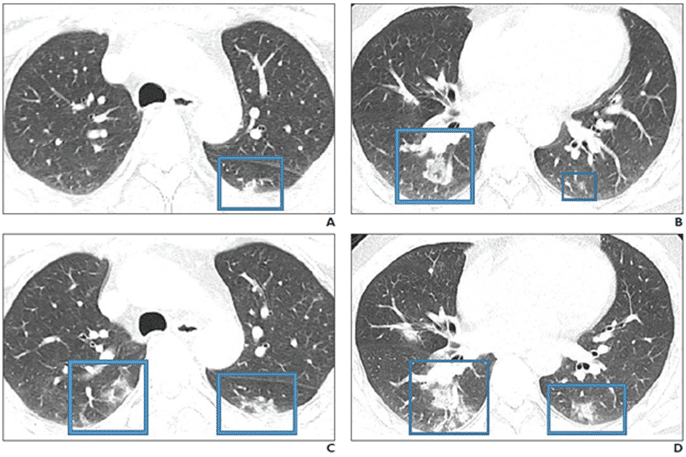
Response: COVID19 is a novel strain of the coronavirus family causing pneumonia. Two similar strains were discovered in 2003 and 2012 to cause the so-called SARS and MERS outbreaks, respectively. Radiologists need to be prepared for the escalating incidence of COVID-19. We reviewed the literature to extract the epidemiologic and imaging features of SARS and MERS in comparison with known imaging features of COVID-19 pneumonia to have a better understanding of the imaging features of the COVID19 pneumonia in acute and post-recovery stages.
Dr. Kooraki[/caption]
Soheil Kooraki MSR MS, MD
on behalf of Dr. Ali Gholamrezanezhad MD and co-authors
Department of Radiological Sciences,
David Geffen School of Medicine, University of California at Los Angeles
Los Angeles, California
MedicalResearch.com: What is the background for this study? What are the main findings?
Response: COVID19 is a novel strain of the coronavirus family causing pneumonia. Two similar strains were discovered in 2003 and 2012 to cause the so-called SARS and MERS outbreaks, respectively. Radiologists need to be prepared for the escalating incidence of COVID-19. We reviewed the literature to extract the epidemiologic and imaging features of SARS and MERS in comparison with known imaging features of COVID-19 pneumonia to have a better understanding of the imaging features of the COVID19 pneumonia in acute and post-recovery stages.