MedicalResearch.com Interview with:
 Pipat Piewngam
Postdoctorol fellow
Pathogen Molecular Genetics Section,
Laboratory of Bacteriology,
NIAID/NIH
Bethesda, MD, USA 20892
MedicalResearch.com: What is the background for this study? What are the main findings?
Response: Our team at National Institutes of health, Mahidol University and Rajamangala University of Technology in Thailand has reported that the consumption of probiotic
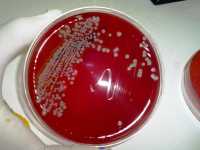
Bacillus bacteria comprehensively abolishes colonization with the dangerous pathogen,
Staphylococcus aureus.
We hypothesized that the composition of the human gut microbiota affects intestinal colonization with
S. aureus. We collected fecal samples from 200 healthy individuals from rural populations in Thailand and analyzed the composition of the gut microbiome by 16S rRNA sequencing. Surprisingly, we did not detect significant differences in the composition of the microbiome between
S. aureus carriers and non-carriers. We then sampled the same 200 people for
S. aureus in the gut (25 positive) and nose (26 positive). Strikingly, we found no
S. aureus in any of the samples where
Bacillus were present.
In mouse studies, we discovered
S. aureus Agr quorum-sensing signaling system
that must function for the bacteria to grow in the gut. Intriguingly, all of the more than 100 Bacillus isolates we had recovered from the human feces efficiently inhibited that system. Then, we discovered that the fengycin class of
Bacillus lipopeptides achieves colonization resistance by inhibiting that system.
To further validate their findings, we colonized the gut of mice with
S. aureus and fed them
B. subtilis spores to mimic probiotic intake. Probiotic Bacillus given every two days eliminated
S. aureus in the guts of the mice. The same test using Bacillus where fengycin production had been removed had no effect, and
S. aureus grew as expected. This is one of the first study that provide human evidence supporting the biological significance of probiotic bacterial interference and show that such interference can be achieved by blocking a pathogen’s signaling system.








 Dr. Nicole Karcher, PhD
Post-doctoral scholar with the NIMH Training in Clinical Sciences fellowship
Department of Psychiatry
Washington University School of Medicine
MedicalResearch.com: What is the background for this study? What are the main findings?
Response: For over fifteen years, researchers have debated the role that cannabis use plays in the development of both psychotic disorders as well as subthreshold psychotic symptoms, such as psychotic-like experiences (PLEs). There is still a lack of consensus regarding the nature of the association between cannabis use and psychosis risk, with some research finding evidence for genetic overlap, while other research finds evidence for potentially causal pathways.
The current study examined data from twins and siblings from two different samples, the U.S.-based Human Connectome Project and the Australian Twin Registry, with a total of 4,674 participants. Overall, psychotic-like experiences were associated with three separate cannabis use variables [frequent (≥100 times) use, a Cannabis Use Disorder diagnosis, and current cannabis use]. Furthermore, the current research found evidence for both shared genetic and individual-specific contributions to the association between PLEs and these three cannabis use variables. More specifically, while the association between cannabis use and psychotic-like experiences was largely attributable to shared genetic factors, cannabis users were more likely to endorse PLEs in comparison to the relative who used cannabis less.
Dr. Nicole Karcher, PhD
Post-doctoral scholar with the NIMH Training in Clinical Sciences fellowship
Department of Psychiatry
Washington University School of Medicine
MedicalResearch.com: What is the background for this study? What are the main findings?
Response: For over fifteen years, researchers have debated the role that cannabis use plays in the development of both psychotic disorders as well as subthreshold psychotic symptoms, such as psychotic-like experiences (PLEs). There is still a lack of consensus regarding the nature of the association between cannabis use and psychosis risk, with some research finding evidence for genetic overlap, while other research finds evidence for potentially causal pathways.
The current study examined data from twins and siblings from two different samples, the U.S.-based Human Connectome Project and the Australian Twin Registry, with a total of 4,674 participants. Overall, psychotic-like experiences were associated with three separate cannabis use variables [frequent (≥100 times) use, a Cannabis Use Disorder diagnosis, and current cannabis use]. Furthermore, the current research found evidence for both shared genetic and individual-specific contributions to the association between PLEs and these three cannabis use variables. More specifically, while the association between cannabis use and psychotic-like experiences was largely attributable to shared genetic factors, cannabis users were more likely to endorse PLEs in comparison to the relative who used cannabis less.