MedicalResearch.com Interview with:
[caption id="attachment_34196" align="alignleft" width="167"]

Dr. Thomas Leonard[/caption]
Thomas Leonard, Ph.D.
Executive director, Clinical Development and Medical Affairs, Specialty Care
Boehringer Ingelheim Pharmaceuticals, Inc.
MedicalResearch.com: What is the background for this study? Would you tell us a little more about IPF?
Response: Boehringer Ingelheim’s Phase III PF-ILD (progressive fibrosing interstitial lung disease) trial will investigate the safety and efficacy of nintedanib, in a range of progressive fibrosing lung conditions other than idiopathic pulmonary fibrosis, or IPF. The PF-ILD trial is the first time that patients with different fibrosing lung diseases will be included in one single clinical trial assessing the efficacy of nintedanib as a potential treatment, and the trial is the first in the field of fibrosing lung diseases to group patients based on the clinical characteristics of their disease, rather than the diagnosis.
There are more than 200 conditions that affect the tissue and space around the air sacs of the lungs, or interstitium, and, collectively, these conditions are called interstitial lung diseases -- or ILDs. Based on clinical observations, there is a group of patients with ILD who, independent from the classification of the ILD, exhibit progressive fibrosis. The proposed terminology for describing this group of patients is PF-ILD. In these patients, the disease appears to follow a course similar to IPF with worsening of respiratory symptoms, lung function, quality of life and ability to perform daily activities, as well as early mortality despite treatment.
There is currently no efficacious treatment available for PF-ILD. This trial is exploring how fibrosis in the lungs is treated and whether nintedanib is a potential treatment, based on the efficacy and safety of nintedanib in IPF, a rare and serious lung disease that causes permanent scarring of the lungs, making it difficult to breathe. IPF affects as many as 132,000 Americans, typically men over the age of 65. On average, people with IPF live only three to five years after diagnosis, and approximately 40,000 people die from this disease every year.

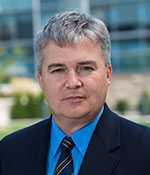 Dr. Devereaux[/caption]
Dr. PJ Devereaux MD, PhD, FRCP(C)
Director of the Division of Cardiolog
Scientific Leader of the Anesthesiology, Perioperative Medicine and
Surgical Research Group at the Population Health Research Institute
Professor and University Scholar in the Departments of Health Research Methods, Evidence, and Impact and Medicine
McMaster University
MedicalResearch.com: What is the background for this study?
Response: Although the majority of patients undergoing noncardiac surgery benefit from surgery and do well, even when a small proportion of these patients have a serious complication it represents a major population issue. A recent publication in JAMA Cardiology established that >5 million Americans age ≥45 years undergo major in-patient noncardiac surgery annually, and 1.3% of these patients die in the hospital. This means 65,000 of these patients die, and cardiovascular causes are a dominant cause.
Dr. Devereaux[/caption]
Dr. PJ Devereaux MD, PhD, FRCP(C)
Director of the Division of Cardiolog
Scientific Leader of the Anesthesiology, Perioperative Medicine and
Surgical Research Group at the Population Health Research Institute
Professor and University Scholar in the Departments of Health Research Methods, Evidence, and Impact and Medicine
McMaster University
MedicalResearch.com: What is the background for this study?
Response: Although the majority of patients undergoing noncardiac surgery benefit from surgery and do well, even when a small proportion of these patients have a serious complication it represents a major population issue. A recent publication in JAMA Cardiology established that >5 million Americans age ≥45 years undergo major in-patient noncardiac surgery annually, and 1.3% of these patients die in the hospital. This means 65,000 of these patients die, and cardiovascular causes are a dominant cause.