MedicalResearch.com Interview with:
[caption id="attachment_31650" align="alignleft" width="165"]

Dr. Ruopeng An[/caption]
Ruopeng An, PhD
Assistant Professor
Department of Kinesiology and Community Health
College of Applied Health Sciences
University of Illinois at Urbana-Champaign
Champaign, IL 61820
MedicalResearch.com: What is the background for this study? What are the main findings?
Response: Coffee and tea are among the most widely consumed beverages in U.S. adults.1,2 Unlike other popular beverages including alcohol and sugar-sweetened beverages that are typically consumed in isolation, many people prefer drinking coffee and tea with add-ins like sugar or cream. These add-in items are often dense in energy and fat but low in nutritional value. Drinking coffee and tea with add-ins on a regular basis might impact an individual’s daily energy/nutrient intake and diet quality.3 The 2015-2020 Dietary Guidelines for Americans suggests that “coffee, tea, and flavored waters also can be selected, but calories from cream, added sugars, and other additions should be accounted for within the eating pattern.”4
To our knowledge, no study has been conducted to assess consumption of coffee and tea with add-ins in relation to daily energy and nutrient intake at the population level. Bouchard et al. examined the association between coffee and tea consumption with add-ins and body weight status rather than energy/nutrient intake, and consumption was measured by a few frequency-related questions instead of a 24-hour dietary recall.5
The purpose of this study was to examine consumption of
coffee and tea with add-ins (e.g., sugar, cream) in relation to energy, sugar, and fat intake among U.S. adults 18 years of age and above. Data came from 2001-2012 National Health and Nutrition Examination Survey (NHANES), comprising a nationally-representative (biennially) repeated cross-sectional sample of 13,185 and 6,215 adults who reported coffee and tea consumption in in-person 24-hour dietary recalls, respectively.

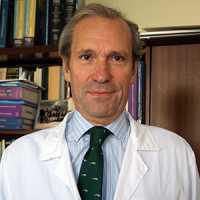
 Dr. Harri Hemilae[/caption]
Harri Hemilä, MD, PhD
Department of Public Health
University of Helsinki
MedicalResearch.com: What is the background for this study?
Response: I have a long term interest in vitamin C. Previously I have shown that it alleviates exercise-induced bronchoconstriction (EIB) (http://dx.doi.org/10.1186/1710-1492-10-58 ) and shortens the duration of colds ( http://dx.doi.org/10.1371/journal.pmed.0020168 ). Now I had been following the literature and I noted that a number of randomized trials were being published about vitamin C for preventing post-operative atrial fibrillation (POAF). Therefore I reasoned that it is worthwhile to analyze that set of trials
Dr. Harri Hemilae[/caption]
Harri Hemilä, MD, PhD
Department of Public Health
University of Helsinki
MedicalResearch.com: What is the background for this study?
Response: I have a long term interest in vitamin C. Previously I have shown that it alleviates exercise-induced bronchoconstriction (EIB) (http://dx.doi.org/10.1186/1710-1492-10-58 ) and shortens the duration of colds ( http://dx.doi.org/10.1371/journal.pmed.0020168 ). Now I had been following the literature and I noted that a number of randomized trials were being published about vitamin C for preventing post-operative atrial fibrillation (POAF). Therefore I reasoned that it is worthwhile to analyze that set of trials