MedicalResearch.com Interview with:
[caption id="attachment_25531" align="alignleft" width="133"]

Magnolia Cardona-Morrell[/caption]
Dr Magnolia Cardona-Morrell, MPH, PhD
Senior Research Fellow
The Simpson Centre for Health Services Research
South Western Sydney Clinical School
Sydney
MedicalResearch.com: What is the background for this study? What are the main findings?
Response: We name the non beneficial treatments – those intensive procedures, medications or tests administered to elderly patients who are naturally dying and which will not make a difference to their survival, will probably impair their remaining quality of life or potentially or cause them pain or suffering – that are still occurring in hospitals. Think of these as unnecessary or excessive for the expected benefit.
Our review of 38 studies, including 1.2 million patients, doctors, nurses and relatives in 10 countries, showed that on average 33% of elderly patients in the last six months of life and up to the last seven days of life received some of these treatments.
Examples include:
• attempting CPR on elderly patients with advanced disease or who have a “not-for-resuscitation” order (11-25%)
• admission to intensive care in patients with advanced chronic disease (average 10% and up to 33%)
• initiation or continuation of chemotherapy at the end of life (24-41%)
• hemodialysis, transfusions, oral or intravenous medications to patients in terminal admissions (7-77%)
These treatments continue happen after two decades due to a combination of factors:
• patients’ lack of communication with families about end-of-life care wishes
• unrealistic social expectation of survival due to technological advances
• family pressure for doctors to “try everything possible”
• medico-legal concerns
• doctors’ uncertainty about the time until death and
• the default position of intervening because doctors are trained to cure disease and save lives.

 Prof. Christiane Angermann[/caption]
Prof. Dr. med. Christiane E. Angermann, FESC, HFA
Deutsches Zentrum für Herzinsuffizienz Würzburg
Comprehensive Heart Failure Center (CHFC)
Universitätsklinikum Würzburg
Würzburg
MedicalResearch.com: What is the background for this study? What are the main findings?
Response: Previous meta-analysis indicates that depression prevalence in patients with heart failure is much higher than in the general population, 10 percent to 40 percent, depending on disease severity. Depression has been shown to be an independent predictor of mortality and rehospitalization in patients with heart failure, with incidence rates increasing in parallel with depression severity. Furthermore, it is associated with poor quality of life and increased healthcare costs.
It would, against this background, seem desirable to treat the depression, and when planning the study we hypothesized that by doing so we might be able to improve depression and thus reduce mortality and morbidity of this population. Long-term efficacy and safety of selective serotonin reuptake inhibitors (SSRIs), which are widely used to treat depression and have proven efficacious in individuals with primary depression, is unknown for patients with heart failure and (comorbid) depression.
Prof. Christiane Angermann[/caption]
Prof. Dr. med. Christiane E. Angermann, FESC, HFA
Deutsches Zentrum für Herzinsuffizienz Würzburg
Comprehensive Heart Failure Center (CHFC)
Universitätsklinikum Würzburg
Würzburg
MedicalResearch.com: What is the background for this study? What are the main findings?
Response: Previous meta-analysis indicates that depression prevalence in patients with heart failure is much higher than in the general population, 10 percent to 40 percent, depending on disease severity. Depression has been shown to be an independent predictor of mortality and rehospitalization in patients with heart failure, with incidence rates increasing in parallel with depression severity. Furthermore, it is associated with poor quality of life and increased healthcare costs.
It would, against this background, seem desirable to treat the depression, and when planning the study we hypothesized that by doing so we might be able to improve depression and thus reduce mortality and morbidity of this population. Long-term efficacy and safety of selective serotonin reuptake inhibitors (SSRIs), which are widely used to treat depression and have proven efficacious in individuals with primary depression, is unknown for patients with heart failure and (comorbid) depression.





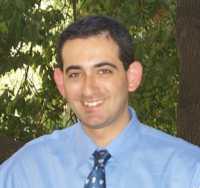


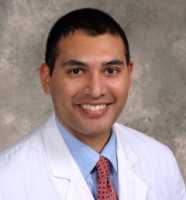



 Dr. Audrey Chang[/caption]
MedicalResearch.com Interview with:
Dr. Audrey Chang, PhD
Kamm-Stull Lab
UT Southwestern Medical Center
AudreyN.Chang@UTSouthwestern.edu
MedicalResearch.com: What is the background for this study? What are the main findings?
Response: The heart is a singular kind of muscle that contracts and relaxes continuously over a lifetime to pump blood to the body’s organs. Contractions depend on a motor protein myosin pulling on actin filaments in specialized structures. Heart contraction is improved when myosin has a phosphate molecule attached to it (phosphorylation), and a constant amount of phosphorylation is essential for normal heart function. The amount of phosphorylation necessary for optimal cardiac performance is maintained by a balance in the activities of myosin kinase enzymes that add the phosphate and an opposing phosphatase enzyme that removes the phosphate. If the amount of phosphorylation is too low, heart failure results. Animal models with increased myosin phosphorylation have enhanced cardiac performance that resist stresses that cause heart failure.
In this recent study reported in PNAS, a new kinase that phosphorylates myosin in heart muscle, MLCK4, was discovered and its crystal structure reported, a first for any myosin kinase family member. Compared to distinct myosin kinases in other kinds of muscles (skeletal and smooth), this cardiac-specific kinase lacks a conserved regulatory segment that inhibits kinase activity consistent with biochemical studies that it is always turned on. Additionally, another related myosin kinase found only in heart muscle (MLCK3) contains a modified regulatory segment, allowing partial activity enhanced by the calcium modulator protein, calmodulin. Thus, both myosin kinases unique to cardiac muscle provide phosphate to myosin in normal beating hearts to optimize performance and prevent heart failure induced by stresses.
Dr. Audrey Chang[/caption]
MedicalResearch.com Interview with:
Dr. Audrey Chang, PhD
Kamm-Stull Lab
UT Southwestern Medical Center
AudreyN.Chang@UTSouthwestern.edu
MedicalResearch.com: What is the background for this study? What are the main findings?
Response: The heart is a singular kind of muscle that contracts and relaxes continuously over a lifetime to pump blood to the body’s organs. Contractions depend on a motor protein myosin pulling on actin filaments in specialized structures. Heart contraction is improved when myosin has a phosphate molecule attached to it (phosphorylation), and a constant amount of phosphorylation is essential for normal heart function. The amount of phosphorylation necessary for optimal cardiac performance is maintained by a balance in the activities of myosin kinase enzymes that add the phosphate and an opposing phosphatase enzyme that removes the phosphate. If the amount of phosphorylation is too low, heart failure results. Animal models with increased myosin phosphorylation have enhanced cardiac performance that resist stresses that cause heart failure.
In this recent study reported in PNAS, a new kinase that phosphorylates myosin in heart muscle, MLCK4, was discovered and its crystal structure reported, a first for any myosin kinase family member. Compared to distinct myosin kinases in other kinds of muscles (skeletal and smooth), this cardiac-specific kinase lacks a conserved regulatory segment that inhibits kinase activity consistent with biochemical studies that it is always turned on. Additionally, another related myosin kinase found only in heart muscle (MLCK3) contains a modified regulatory segment, allowing partial activity enhanced by the calcium modulator protein, calmodulin. Thus, both myosin kinases unique to cardiac muscle provide phosphate to myosin in normal beating hearts to optimize performance and prevent heart failure induced by stresses.





 Dr. Phillip Coffin[/caption]
Phillip O. Coffin, MD, MIA
Director of Substance Use Research
San Francisco Department of Public Health
Assistant Professor, Division of HIV, ID & Global Health
University of California, San Francisco
MedicalResearch.com: What is the background for this study? What are the main findings?
Response: San Francisco has a longstanding naloxone distribution program that primarily works out of syringe exchange programs and is temporally associated with a substantial decline in opioid overdose death due to heroin or involving injection drug use. Over 90% of opioid overdose deaths from 2010-2012 were due to prescription opioids in the absence of heroin, and most of those decedents were prescribed opioids in primary care settings. Based on these data, as well as anecdotal reports from sites such as U.S. Army Fort Bragg in North Carolina - where providing naloxone to pain patients appeared to be associated with a radical decline in opioid overdose admissions to the emergency department - we implemented a naloxone prescribing program in the safety net primary care clinics.
We recommended that providers offer naloxone to all patients who used opioids on a regular basis, or were otherwise at risk for experiencing or witnessing an opioid overdose, although we only measured outcomes related to patients who were prescribed opioids for chronic pain. We also recommended that providers avoid the term "overdose" as that term does not properly reflect the epidemiology of opioid poisoning and is interpreted by many to mean intentionally consuming a large amount of opioids; instead we recommended saying things like: "Opioids can cause bad reactions where you stop breathing or can't be woken up." Providers prescribed mostly the jerry-rigged nasal device, with the atomizer and a brochure dispensed at clinic and the naloxone picked up at the patients' usual pharmacies, to approximate real-world medical practice.
Dr. Phillip Coffin[/caption]
Phillip O. Coffin, MD, MIA
Director of Substance Use Research
San Francisco Department of Public Health
Assistant Professor, Division of HIV, ID & Global Health
University of California, San Francisco
MedicalResearch.com: What is the background for this study? What are the main findings?
Response: San Francisco has a longstanding naloxone distribution program that primarily works out of syringe exchange programs and is temporally associated with a substantial decline in opioid overdose death due to heroin or involving injection drug use. Over 90% of opioid overdose deaths from 2010-2012 were due to prescription opioids in the absence of heroin, and most of those decedents were prescribed opioids in primary care settings. Based on these data, as well as anecdotal reports from sites such as U.S. Army Fort Bragg in North Carolina - where providing naloxone to pain patients appeared to be associated with a radical decline in opioid overdose admissions to the emergency department - we implemented a naloxone prescribing program in the safety net primary care clinics.
We recommended that providers offer naloxone to all patients who used opioids on a regular basis, or were otherwise at risk for experiencing or witnessing an opioid overdose, although we only measured outcomes related to patients who were prescribed opioids for chronic pain. We also recommended that providers avoid the term "overdose" as that term does not properly reflect the epidemiology of opioid poisoning and is interpreted by many to mean intentionally consuming a large amount of opioids; instead we recommended saying things like: "Opioids can cause bad reactions where you stop breathing or can't be woken up." Providers prescribed mostly the jerry-rigged nasal device, with the atomizer and a brochure dispensed at clinic and the naloxone picked up at the patients' usual pharmacies, to approximate real-world medical practice.