MedicalResearch.com Interview with:
 Jinmyoung Cho, PhD
Assistant Investigator
Center for Applied Health Research
Baylor Scott & White Health
Temple, TX 76508
Texas A&M Health Science Center
College Station, Texas
MedicalResearch.com: What is the background for this study? What are the main findings?
Response: Early life-course transition experiences to the adult years result in continuing consequences for health in later life. Many veterans have encountered life-threatening environments while they were on military service leading to a higher incidence of physical and mental diseases; greater comorbidity profiles in veterans contribute to higher mortality rate compared to non-veterans.
With increased life expectancy and demographic shifts in our population, the proportion of oldest-old adults, aged over 80 years, continues to increase. The publicly funded Veterans Health Administration (VHA) must care efficiently and effectively for its increasing population of veterans, who are older, sicker, and socioeconomically disadvantaged relative to non-veterans.
Given the large number of veterans over age 80 and the increasing emphasis on managing the aging process, it is important to identify associations between healthcare utilization and survival for VHA’s oldest patients.
We identified protective and risk factors associated with mortality by age group. During a 5-year follow-up period, 44% of patients aged 85 years and over died with survival rates of 59% for 80’s, 32% for 90’s and 15% for 100’s. In the multivariable model, protective effects for veterans 80-99 were female sex, minority race or ethnicity, being married, having certain physical and mental diagnoses (e.g., hypertension, cataract, dyslipidemia, posttraumatic stress disorder, bipolar disorder), urgent care visits, invasive surgery, and few (one to three) prescriptions. Risk factors were lower VHA priority status, physical and mental conditions (e.g., diabetes, anemia, congestive heart failure, dementia, anxiety, depression, smoking, substance abuse disorder), hospital admission, and nursing home care. For those in their 100s, married status, smoking, hospital admission, nursing home care, invasive surgery, and prescription use were significant risk factors; only emergency department (ED) use was protective.

 Magnolia Cardona-Morrell[/caption]
Dr Magnolia Cardona-Morrell, MPH, PhD
Senior Research Fellow
The Simpson Centre for Health Services Research
South Western Sydney Clinical School
Sydney
MedicalResearch.com: What is the background for this study? What are the main findings?
Response: We name the non beneficial treatments – those intensive procedures, medications or tests administered to elderly patients who are naturally dying and which will not make a difference to their survival, will probably impair their remaining quality of life or potentially or cause them pain or suffering – that are still occurring in hospitals. Think of these as unnecessary or excessive for the expected benefit.
Our review of 38 studies, including 1.2 million patients, doctors, nurses and relatives in 10 countries, showed that on average 33% of elderly patients in the last six months of life and up to the last seven days of life received some of these treatments.
Examples include:
• attempting CPR on elderly patients with advanced disease or who have a “not-for-resuscitation” order (11-25%)
• admission to intensive care in patients with advanced chronic disease (average 10% and up to 33%)
• initiation or continuation of chemotherapy at the end of life (24-41%)
• hemodialysis, transfusions, oral or intravenous medications to patients in terminal admissions (7-77%)
These treatments continue happen after two decades due to a combination of factors:
• patients’ lack of communication with families about end-of-life care wishes
• unrealistic social expectation of survival due to technological advances
• family pressure for doctors to “try everything possible”
• medico-legal concerns
• doctors’ uncertainty about the time until death and
• the default position of intervening because doctors are trained to cure disease and save lives.
Magnolia Cardona-Morrell[/caption]
Dr Magnolia Cardona-Morrell, MPH, PhD
Senior Research Fellow
The Simpson Centre for Health Services Research
South Western Sydney Clinical School
Sydney
MedicalResearch.com: What is the background for this study? What are the main findings?
Response: We name the non beneficial treatments – those intensive procedures, medications or tests administered to elderly patients who are naturally dying and which will not make a difference to their survival, will probably impair their remaining quality of life or potentially or cause them pain or suffering – that are still occurring in hospitals. Think of these as unnecessary or excessive for the expected benefit.
Our review of 38 studies, including 1.2 million patients, doctors, nurses and relatives in 10 countries, showed that on average 33% of elderly patients in the last six months of life and up to the last seven days of life received some of these treatments.
Examples include:
• attempting CPR on elderly patients with advanced disease or who have a “not-for-resuscitation” order (11-25%)
• admission to intensive care in patients with advanced chronic disease (average 10% and up to 33%)
• initiation or continuation of chemotherapy at the end of life (24-41%)
• hemodialysis, transfusions, oral or intravenous medications to patients in terminal admissions (7-77%)
These treatments continue happen after two decades due to a combination of factors:
• patients’ lack of communication with families about end-of-life care wishes
• unrealistic social expectation of survival due to technological advances
• family pressure for doctors to “try everything possible”
• medico-legal concerns
• doctors’ uncertainty about the time until death and
• the default position of intervening because doctors are trained to cure disease and save lives.









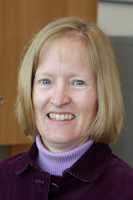
 Dr. Lu Qi[/caption]
Lu Qi, MD, PhD, FAHA
HCA Regents Distinguished Chair and Professor
Director, Tulane University Obesity Research Center
Department of Epidemiology
Tulane University
School of Public Health and Tropical Medicine
New Orleans, LA 70112
MedicalResearch.com: What is the background for this study? What are the main findings?
Response: Prenatal malnutrition and other stresses may cause small newborn babies, who are more likely develop type 2 diabetes and other chronic diseases during adulthood. However, whether such relation is causal remains to be determined. Genetic associations provide a new approach to provide evidence for such causality.
Dr. Lu Qi[/caption]
Lu Qi, MD, PhD, FAHA
HCA Regents Distinguished Chair and Professor
Director, Tulane University Obesity Research Center
Department of Epidemiology
Tulane University
School of Public Health and Tropical Medicine
New Orleans, LA 70112
MedicalResearch.com: What is the background for this study? What are the main findings?
Response: Prenatal malnutrition and other stresses may cause small newborn babies, who are more likely develop type 2 diabetes and other chronic diseases during adulthood. However, whether such relation is causal remains to be determined. Genetic associations provide a new approach to provide evidence for such causality.





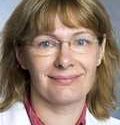


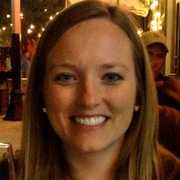 Lindsay Kohler[/caption]
Lindsay Kohler MPH
Mel and Enid Zuckerman College of Public Health
Tucson, Arizona
MedicalResearch.com: What is the background for this study? What are the main findings?
Response: Several studies have reported that following health promotion guidelines for diet, physical activity, and maintenance of a healthy body weight may reduce the risk of getting cancer or dying from cancer. We performed a systematic review to examine the associations between established cancer prevention guidelines for diet and physical activity and cancer outcomes. We found that adhering to cancer prevention guidelines set forth by the American Cancer Society or the World Cancer Research Fund/American Institute for Cancer Research consistently reduced the risk of overall cancer incidence and mortality (10-61%) in the studies included in this review. In addition, higher adherence to the guidelines consistently reduced the risk of breast, colorectal, and endometrial cancers. Adherence to a pattern of healthy behaviors may significantly reduce cancer incidence and mortality.
Lindsay Kohler[/caption]
Lindsay Kohler MPH
Mel and Enid Zuckerman College of Public Health
Tucson, Arizona
MedicalResearch.com: What is the background for this study? What are the main findings?
Response: Several studies have reported that following health promotion guidelines for diet, physical activity, and maintenance of a healthy body weight may reduce the risk of getting cancer or dying from cancer. We performed a systematic review to examine the associations between established cancer prevention guidelines for diet and physical activity and cancer outcomes. We found that adhering to cancer prevention guidelines set forth by the American Cancer Society or the World Cancer Research Fund/American Institute for Cancer Research consistently reduced the risk of overall cancer incidence and mortality (10-61%) in the studies included in this review. In addition, higher adherence to the guidelines consistently reduced the risk of breast, colorectal, and endometrial cancers. Adherence to a pattern of healthy behaviors may significantly reduce cancer incidence and mortality.
 Prof. Peter Johnson[/caption]
Peter Johnson MA, MD, FRCP
Professor of Medical Oncology
Cancer Research UK Centre
Southampton General Hospital
Southampton
MedicalResearch.com: What is the background for this study? What are the main findings?
Prof. Johnson: Based upon retrospective series looking at the ability of interim PET to predict the outcomes of treatment, we aimed to test the idea of modulating treatment in response to an early assessment of the response to ABVD: could we safely reduce the amount of treatment by omitting bleomycin in the group who had responded well? Although the risk of severe toxicity from bleomycin is generally low, for the small number of patients who experience it, it can be life-changing or even fatal. We also wanted to test whether it might be possible to reduce the use of consolidation radiotherapy by comparison to our previous trials, and this seems to have worked too: we used radiotherapy in less than 10% of patients in RATHL, as compared to around half in our previous trials. We have seen better survival figures than in our previous studies with less treatment overall, so it feels as though we are on the right track.
Prof. Peter Johnson[/caption]
Peter Johnson MA, MD, FRCP
Professor of Medical Oncology
Cancer Research UK Centre
Southampton General Hospital
Southampton
MedicalResearch.com: What is the background for this study? What are the main findings?
Prof. Johnson: Based upon retrospective series looking at the ability of interim PET to predict the outcomes of treatment, we aimed to test the idea of modulating treatment in response to an early assessment of the response to ABVD: could we safely reduce the amount of treatment by omitting bleomycin in the group who had responded well? Although the risk of severe toxicity from bleomycin is generally low, for the small number of patients who experience it, it can be life-changing or even fatal. We also wanted to test whether it might be possible to reduce the use of consolidation radiotherapy by comparison to our previous trials, and this seems to have worked too: we used radiotherapy in less than 10% of patients in RATHL, as compared to around half in our previous trials. We have seen better survival figures than in our previous studies with less treatment overall, so it feels as though we are on the right track.
 Dr. Mima Becevic[/caption]
Mirna Becevic, PhD, MHA
Assistant Research Professor
University of Missouri - Department of Dermatology
Missouri Telehealth Network
MedicalResearch.com: What is the background for this study?
Response: Psychiatry is, by far, the biggest utilizer of telemedicine services on the Missouri Telehealth Network (MTN). MTN supports an average of 4000 tele-psychiatry appointments every month, and 10% of those are provided by the University of Missouri Department of Psychiatry. Since we are all aware of the ever-increasing demand for child and adolescent psychiatry, but also the stigma that goes along with it, we wanted to examine more closely the actual usage of those services at the University of Missouri.
Dr. Mima Becevic[/caption]
Mirna Becevic, PhD, MHA
Assistant Research Professor
University of Missouri - Department of Dermatology
Missouri Telehealth Network
MedicalResearch.com: What is the background for this study?
Response: Psychiatry is, by far, the biggest utilizer of telemedicine services on the Missouri Telehealth Network (MTN). MTN supports an average of 4000 tele-psychiatry appointments every month, and 10% of those are provided by the University of Missouri Department of Psychiatry. Since we are all aware of the ever-increasing demand for child and adolescent psychiatry, but also the stigma that goes along with it, we wanted to examine more closely the actual usage of those services at the University of Missouri.
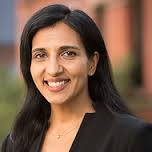 Dr. Sunita Sah[/caption]
Sunita Sah MD PhD
Management & Organizations
Johnson Graduate School of Management
Cornell University
MedicalResearch.com: What is the background for this study? What are the main findings?
Dr. Sah: Physicians often recommend the treatment they specialize in, e.g., surgeons are more likely to recommend surgery than non-surgeons. Results from an observational study and a randomized controlled laboratory experiment found that when physicians revealed their bias toward their own specialty, patients were more likely to report increased trust in the physician’s expertise and take the treatment in accordance with the physician’s specialty.
Dr. Sunita Sah[/caption]
Sunita Sah MD PhD
Management & Organizations
Johnson Graduate School of Management
Cornell University
MedicalResearch.com: What is the background for this study? What are the main findings?
Dr. Sah: Physicians often recommend the treatment they specialize in, e.g., surgeons are more likely to recommend surgery than non-surgeons. Results from an observational study and a randomized controlled laboratory experiment found that when physicians revealed their bias toward their own specialty, patients were more likely to report increased trust in the physician’s expertise and take the treatment in accordance with the physician’s specialty.  Prof. Chris Semsarian[/caption]
Professor Chris Semsarian
MBBS PhD MPH FRACP FAHMS FAHA FHRS FCSANZ
Professor of Medicine, University of Sydney
Cardiologist, Royal Prince Alfred Hospital
NHMRC Practitioner Fellow
Head, Molecular Cardiology Program
Centenary Institute,
Newtown NSW Australia
MedicalResearch.com: What is the background for this study?
Response: Sudden cardiac death is a tragic and devastating event at all ages, and especially in the young (aged under 35 years). Understanding the causes and circumstances of SCD in the young is critical if we are to develop strategies to prevent SCD in the young. Our study represents the first prospective, population-based study of SCD in the young across two nations, Australia and New Zealand.
Prof. Chris Semsarian[/caption]
Professor Chris Semsarian
MBBS PhD MPH FRACP FAHMS FAHA FHRS FCSANZ
Professor of Medicine, University of Sydney
Cardiologist, Royal Prince Alfred Hospital
NHMRC Practitioner Fellow
Head, Molecular Cardiology Program
Centenary Institute,
Newtown NSW Australia
MedicalResearch.com: What is the background for this study?
Response: Sudden cardiac death is a tragic and devastating event at all ages, and especially in the young (aged under 35 years). Understanding the causes and circumstances of SCD in the young is critical if we are to develop strategies to prevent SCD in the young. Our study represents the first prospective, population-based study of SCD in the young across two nations, Australia and New Zealand.