

 Dr. Giebultowicz[/caption]
Dr. Jaga Giebultowicz
Professor Emeritus,
Department of Integrative Biology
Oregon State University
Corvallis, OR 97331
MedicalResearch.com: What is the background for this study? Where is blue light commonly found?
Response: Our study in short-lived model organism Drosophila revealed that cumulative, long-term exposure to blue light impacts brain function, accelerates the aging process and significantly shortens lifespan compared to flies maintained in constant darkness or in white light with blue wavelengths blocked.
Blue light is predominantly produced by the light-emitting diodes (LEDs); it appears white due to the addition of yellow fluorescent powder which is activated by blue light. LEDs has become a main source of display screens (phones, laptops, desktops, TV), and ambient lights. Indeed, humans have become awash in LEDs for most of their waking hours.
Dr. Giebultowicz[/caption]
Dr. Jaga Giebultowicz
Professor Emeritus,
Department of Integrative Biology
Oregon State University
Corvallis, OR 97331
MedicalResearch.com: What is the background for this study? Where is blue light commonly found?
Response: Our study in short-lived model organism Drosophila revealed that cumulative, long-term exposure to blue light impacts brain function, accelerates the aging process and significantly shortens lifespan compared to flies maintained in constant darkness or in white light with blue wavelengths blocked.
Blue light is predominantly produced by the light-emitting diodes (LEDs); it appears white due to the addition of yellow fluorescent powder which is activated by blue light. LEDs has become a main source of display screens (phones, laptops, desktops, TV), and ambient lights. Indeed, humans have become awash in LEDs for most of their waking hours.

 Dr. Roth[/caption]
Bryan Roth, MD, PhD
Michael Hooker Distinguished Professor
Pharmacology Director, NIMH Psychoactive Drug Screening Program
Eshelman School of Pharmacy
[caption id="attachment_59376" align="alignleft" width="125"]
Dr. Roth[/caption]
Bryan Roth, MD, PhD
Michael Hooker Distinguished Professor
Pharmacology Director, NIMH Psychoactive Drug Screening Program
Eshelman School of Pharmacy
[caption id="attachment_59376" align="alignleft" width="125"] Gavin Schmitz[/caption]
Gavin P. Schmitz
Department of Pharmacology
University of North Carolina at Chapel Hill School of Medicine
Chapel Hill, North Carolina
Department of Pharmacology, School of Medicine
University of North Carolina at Chapel Hill
Chapel Hill, North Carolina
MedicalResearch.com: What is the background for this study? What are the main findings?
Response: There is undoubtably a lot of enthusiasm for psychedelics as therapeutic tools right now both in research and more broadly; however, there are still so many questions that need to be answered. It has been established that SNPs are clinically relevant when considering how patients may respond to various atypical antipsychotic drugs, so we wanted to see if they also could impact psychedelic assisted treatment strategies.
What we found is that genetics do matter; namely, our results indicate that patients with different genes will react differently to psychedelics.
Gavin Schmitz[/caption]
Gavin P. Schmitz
Department of Pharmacology
University of North Carolina at Chapel Hill School of Medicine
Chapel Hill, North Carolina
Department of Pharmacology, School of Medicine
University of North Carolina at Chapel Hill
Chapel Hill, North Carolina
MedicalResearch.com: What is the background for this study? What are the main findings?
Response: There is undoubtably a lot of enthusiasm for psychedelics as therapeutic tools right now both in research and more broadly; however, there are still so many questions that need to be answered. It has been established that SNPs are clinically relevant when considering how patients may respond to various atypical antipsychotic drugs, so we wanted to see if they also could impact psychedelic assisted treatment strategies.
What we found is that genetics do matter; namely, our results indicate that patients with different genes will react differently to psychedelics.
 Dr. Staiano[/caption]
Amanda Staiano, PhD
Associate Professor
Director, Pediatric Obesity and Health Behavior Laboratory
Pennington Biomedical Research Center
Baton Rouge, LA
MedicalResearch.com: What are the main findings?
Response: The U.S. government funds the National Health and Nutrition Examination Survey (NHANES), which is an ongoing surveillance study on the health and nutritional status of people living in the U.S. What is special about NHANES is it’s designed to be nationally representative and it uses objective measurements, so we’re more confident that this accurately reflects the health of the country. For this paper, we looked at the most recently released data to see how many children in the U.S. have obesity, meaning they’re above the 95th percentile for height and weight based on their age and sex. We extracted data from 2011 to 2020, which includes nearly 15,000 children and adolescents and is the most recently available data prior to the March 2020 COVID-19 shutdown when NHANES paused.
Dr. Staiano[/caption]
Amanda Staiano, PhD
Associate Professor
Director, Pediatric Obesity and Health Behavior Laboratory
Pennington Biomedical Research Center
Baton Rouge, LA
MedicalResearch.com: What are the main findings?
Response: The U.S. government funds the National Health and Nutrition Examination Survey (NHANES), which is an ongoing surveillance study on the health and nutritional status of people living in the U.S. What is special about NHANES is it’s designed to be nationally representative and it uses objective measurements, so we’re more confident that this accurately reflects the health of the country. For this paper, we looked at the most recently released data to see how many children in the U.S. have obesity, meaning they’re above the 95th percentile for height and weight based on their age and sex. We extracted data from 2011 to 2020, which includes nearly 15,000 children and adolescents and is the most recently available data prior to the March 2020 COVID-19 shutdown when NHANES paused.

 Clare Jensen[/caption]
Clare Jensen
O’Haire Research Team
Center for the Human-Animal Bond
Purdue University College of Veterinary Medicine
MedicalResearch.com: What is the background for this study?
Response: Service dogs for PTSD are becoming more common and the evidence shows they can help improve mental health and quality of life for many veterans with PTSD. However, some veterans benefit more than others. Our research goal was to ask for the very first time: Why?
Clare Jensen[/caption]
Clare Jensen
O’Haire Research Team
Center for the Human-Animal Bond
Purdue University College of Veterinary Medicine
MedicalResearch.com: What is the background for this study?
Response: Service dogs for PTSD are becoming more common and the evidence shows they can help improve mental health and quality of life for many veterans with PTSD. However, some veterans benefit more than others. Our research goal was to ask for the very first time: Why?

 Dr. LeBoff[/caption]
Meryl S. LeBoff, MD
Chief, Calcium and Bone SectionDirector of the Skeletal Health and Osteoporosis CenterDirector, Bone Density UnitDistinguished Chair in Skeletal Health and Osteoporosis
Professor of Medicine, Harvard Medical School
Endocrinology, Diabetes and Hypertension, Women's Health
Brigham And Women's Hospital
[caption id="attachment_59356" align="alignleft" width="125"]
Dr. LeBoff[/caption]
Meryl S. LeBoff, MD
Chief, Calcium and Bone SectionDirector of the Skeletal Health and Osteoporosis CenterDirector, Bone Density UnitDistinguished Chair in Skeletal Health and Osteoporosis
Professor of Medicine, Harvard Medical School
Endocrinology, Diabetes and Hypertension, Women's Health
Brigham And Women's Hospital
[caption id="attachment_59356" align="alignleft" width="125"] Dr. Manson[/caption]
JoAnn E. Manson, MD, DrPH
Professor, Epidemiology, Harvard T.H. Chan School Of Public Health
Michael and Lee Bell Professor of Women's Health, Medicine, Harvard Medical School
Chief, Preventive Medicine, Brigham And Women's Hospital
Co-Director, Womens Health, Brigham And Women's Hospital
MedicalResearch.com: What is the background for this study? What are the main findings?
Response: Osteoporosis is a major public health problem. Although supplemental vitamin D has been widely used to reduce the risk of fractures in the general population, studies of the effects of vitamin D on fractures, the most important bone health outcome, have been conflicting.
Randomized controlled trials, the highest quality studies, from around the world have shown benefit, no effect, or even harm of supplemental vitamin D on risk of fractures. Some of the trials used bolus dosing, had small samples sizes or short study duration, and co-administered calcium. No large RCTS of this scale tested whether daily supplemental vitamin D (without co-administration with calcium) prevented fractures in the US population.
To fill these knowledge gaps, we tested the hypothesis in this ancillary study to VITAL, whether daily supplemental vitamin D3 reduced the risk of incident total, non-spine and hip fractures in women and men in the US.
Dr. Manson[/caption]
JoAnn E. Manson, MD, DrPH
Professor, Epidemiology, Harvard T.H. Chan School Of Public Health
Michael and Lee Bell Professor of Women's Health, Medicine, Harvard Medical School
Chief, Preventive Medicine, Brigham And Women's Hospital
Co-Director, Womens Health, Brigham And Women's Hospital
MedicalResearch.com: What is the background for this study? What are the main findings?
Response: Osteoporosis is a major public health problem. Although supplemental vitamin D has been widely used to reduce the risk of fractures in the general population, studies of the effects of vitamin D on fractures, the most important bone health outcome, have been conflicting.
Randomized controlled trials, the highest quality studies, from around the world have shown benefit, no effect, or even harm of supplemental vitamin D on risk of fractures. Some of the trials used bolus dosing, had small samples sizes or short study duration, and co-administered calcium. No large RCTS of this scale tested whether daily supplemental vitamin D (without co-administration with calcium) prevented fractures in the US population.
To fill these knowledge gaps, we tested the hypothesis in this ancillary study to VITAL, whether daily supplemental vitamin D3 reduced the risk of incident total, non-spine and hip fractures in women and men in the US.
 Stress might be something that isn’t new to you. Stress can come from a lot of things. You might have problems financially, or you might be struggling with a lot of sleep deprivation, especially if you are the pregnant person in your relationship. People might joke about you enjoying the sleep that you are getting now because it won’t last forever, but the chances are, you aren’t getting nearly enough sleep as it is already.
This is a period filled with highs and lows, especially if the due date is coming around the corner and you are struggling with making sure everything is ready on time. Stress is damaging to the baby too, so if your pregnant partner isn’t your top priority (which it absolutely should be through all of the pregnancy and newborn stages) you should switch it around so they are at the top of your list whenever they need anything.
Stress might be something that isn’t new to you. Stress can come from a lot of things. You might have problems financially, or you might be struggling with a lot of sleep deprivation, especially if you are the pregnant person in your relationship. People might joke about you enjoying the sleep that you are getting now because it won’t last forever, but the chances are, you aren’t getting nearly enough sleep as it is already.
This is a period filled with highs and lows, especially if the due date is coming around the corner and you are struggling with making sure everything is ready on time. Stress is damaging to the baby too, so if your pregnant partner isn’t your top priority (which it absolutely should be through all of the pregnancy and newborn stages) you should switch it around so they are at the top of your list whenever they need anything.
 Prof. Mathers[/caption]
Prof. John C. Mathers PhD
Director, Human Nutrition Research Centre
Director, Centre for Healthier Lives
Population Health Sciences Institute
Newcastle University
Newcastle on Tyne UK
MedicalResearch.com: What is the background for this study?
Response: My colleagues and I have had a long-term interest in carrying out studies in people with hereditary cancer as a model for cancer in the general population. Here we studied people with Lynch syndrome who have an inherited defect in one of the genes encoding the DNA mismatch repair system. Because of this, they accumulate DNA damage faster than the general population and are prone to early cancers at several sites around the body.
In the CAPP2 Study, we randomised almost 1000 people with Lynch syndrome to either resistant starch or to an ordinary corn-starch placebo.
Prof. Mathers[/caption]
Prof. John C. Mathers PhD
Director, Human Nutrition Research Centre
Director, Centre for Healthier Lives
Population Health Sciences Institute
Newcastle University
Newcastle on Tyne UK
MedicalResearch.com: What is the background for this study?
Response: My colleagues and I have had a long-term interest in carrying out studies in people with hereditary cancer as a model for cancer in the general population. Here we studied people with Lynch syndrome who have an inherited defect in one of the genes encoding the DNA mismatch repair system. Because of this, they accumulate DNA damage faster than the general population and are prone to early cancers at several sites around the body.
In the CAPP2 Study, we randomised almost 1000 people with Lynch syndrome to either resistant starch or to an ordinary corn-starch placebo.

 Mytien Nguyen[/caption]
Mytien Nguyen, MS
MD-PhD Program, Yale School of Medicine,
New Haven, Connecticut
MedicalResearch.com: What is the background for this study?
Response: It is well-recognized that diversity in the medical workforce is critical to improve health care access and achieve equity for neglected communities. Despite increased efforts to recruit diverse medical trainees, there remains a large chasm between the racial/ethnic and socioeconomic composition of the patient population and that of the physician workforce.
Mytien Nguyen[/caption]
Mytien Nguyen, MS
MD-PhD Program, Yale School of Medicine,
New Haven, Connecticut
MedicalResearch.com: What is the background for this study?
Response: It is well-recognized that diversity in the medical workforce is critical to improve health care access and achieve equity for neglected communities. Despite increased efforts to recruit diverse medical trainees, there remains a large chasm between the racial/ethnic and socioeconomic composition of the patient population and that of the physician workforce.
 Molluscum DermNet image[/caption]
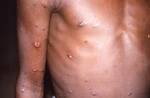
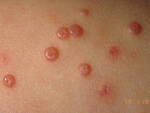
Response: Molluscum Contagiosum (MC) is an infection caused by molluscipoxvirus. It is difficult to study since the virus only survives in human skin, and therefore there isn’t an animal or cell model to study potential treatments. Molluscum lesions appear as raised, domed shaped skin-colored lesions and can occur anywhere on the body but are most common on the face, neck, arms, legs, and abdomen. Sometimes there are few lesions, but clusters of several lesions can appear. Children are the most likely to get molluscum, and the virus is highly contagious, transmitted by direct contact with infected skin or contaminated objects, like towels, linens and toys. Scratching can cause autoinoculation which is when a person reinfects themself.
MC is very common, impacting an estimated 6 million adults and mostly children in the US each year. In 2010, there was an estimated 122 million cases worldwide. It occurs primarily in humid and warm climates, and transmission via swimming pools and bathtubs may be possible. Therefore, molluscum is often called “water warts.”
Many physicians may take a “watch and wait” approach since the virus may clear on its own. However, it can take months to up to 5 years for some to experience complete clearance, In the meantime, the person is still highly contagious and may spread the virus to others, particularly children. Lesions can be bothersome, causing itching and sometimes a secondary infection. There is also a psychosocial component. In a recent study, 1 in 10 children with molluscum experienced a major quality of life issue.
Berdazimer Gel, 10.3% is a potential first-in-class topical controlled-nitric oxide releasing medication containing Berdazimer (sodium), a new chemical entity, and the active ingredient in berdazimer gel 10.3%. The mechanism of action of berdazimer in the treatment of molluscum is unknown, but in vitro lab studies show that the nitric oxide, released when berdazimer is combined with a hydrogel, may impede viral replication and perhaps help body’s natural immune response against molluscum.
Molluscum DermNet image[/caption]
Response: Molluscum Contagiosum (MC) is an infection caused by molluscipoxvirus. It is difficult to study since the virus only survives in human skin, and therefore there isn’t an animal or cell model to study potential treatments. Molluscum lesions appear as raised, domed shaped skin-colored lesions and can occur anywhere on the body but are most common on the face, neck, arms, legs, and abdomen. Sometimes there are few lesions, but clusters of several lesions can appear. Children are the most likely to get molluscum, and the virus is highly contagious, transmitted by direct contact with infected skin or contaminated objects, like towels, linens and toys. Scratching can cause autoinoculation which is when a person reinfects themself.
MC is very common, impacting an estimated 6 million adults and mostly children in the US each year. In 2010, there was an estimated 122 million cases worldwide. It occurs primarily in humid and warm climates, and transmission via swimming pools and bathtubs may be possible. Therefore, molluscum is often called “water warts.”
Many physicians may take a “watch and wait” approach since the virus may clear on its own. However, it can take months to up to 5 years for some to experience complete clearance, In the meantime, the person is still highly contagious and may spread the virus to others, particularly children. Lesions can be bothersome, causing itching and sometimes a secondary infection. There is also a psychosocial component. In a recent study, 1 in 10 children with molluscum experienced a major quality of life issue.
Berdazimer Gel, 10.3% is a potential first-in-class topical controlled-nitric oxide releasing medication containing Berdazimer (sodium), a new chemical entity, and the active ingredient in berdazimer gel 10.3%. The mechanism of action of berdazimer in the treatment of molluscum is unknown, but in vitro lab studies show that the nitric oxide, released when berdazimer is combined with a hydrogel, may impede viral replication and perhaps help body’s natural immune response against molluscum.

 Joanna Jiang, PhD
Agency for Healthcare Research and Quality
Rockville, Maryland
MedicalResearch.com: What is the background for this study? What are the main findings?
Response: Over the last decade we have seen two trends occurring to rural hospitals – closures and mergers. A hospital in financial distress could likely face closure. But if the hospital affiliates with a multihospital system, it may have access to resources from the system that help shelter the hospital from closure.
That is exactly what we found in this study. System affiliation was associated with a lower risk of closure for financially distressed hospitals. However, among hospitals that were financially stable, system affiliation was associated with a higher risk of closure. This is somewhat puzzling and needs further study to better understand the reason for closure.
Joanna Jiang, PhD
Agency for Healthcare Research and Quality
Rockville, Maryland
MedicalResearch.com: What is the background for this study? What are the main findings?
Response: Over the last decade we have seen two trends occurring to rural hospitals – closures and mergers. A hospital in financial distress could likely face closure. But if the hospital affiliates with a multihospital system, it may have access to resources from the system that help shelter the hospital from closure.
That is exactly what we found in this study. System affiliation was associated with a lower risk of closure for financially distressed hospitals. However, among hospitals that were financially stable, system affiliation was associated with a higher risk of closure. This is somewhat puzzling and needs further study to better understand the reason for closure.

How long you can maintain a health regime is one of the biggest factors in its potential for success. ...

 Dr. Midya[/caption]
Dania Valvi, MD MPH PhD
Assistant Professor
Department of Environmental Medicine and Public Health
Co-Director, MS in Epidemiology
Icahn School of Medicine at Mount Sinai
Email: dania.valvi@mssm.edu
MedicalResearch.com: What is the background for this study?
Response: Non-alcoholic fatty liver disease (NAFLD) is the most common liver disease in children in the U.S., Europe and other world regions, currently affecting 1 in every 10 children, and 1 in every 3 children with obesity in the U.S. The rate of pediatric NAFLD has more than doubled in recent decades following the epidemic rates also noted for childhood obesity. There is increasing interest in the role that environmental chemical exposures may play in NAFLD etiology, since several animal studies have shown that prenatal exposures to endocrine-disrupting chemicals (EDCs) cause liver injury and damage; but, until now, the potential effects of prenatal EDC mixture exposures in pediatric NAFLD had not been studied.
Dr. Midya[/caption]
Dania Valvi, MD MPH PhD
Assistant Professor
Department of Environmental Medicine and Public Health
Co-Director, MS in Epidemiology
Icahn School of Medicine at Mount Sinai
Email: dania.valvi@mssm.edu
MedicalResearch.com: What is the background for this study?
Response: Non-alcoholic fatty liver disease (NAFLD) is the most common liver disease in children in the U.S., Europe and other world regions, currently affecting 1 in every 10 children, and 1 in every 3 children with obesity in the U.S. The rate of pediatric NAFLD has more than doubled in recent decades following the epidemic rates also noted for childhood obesity. There is increasing interest in the role that environmental chemical exposures may play in NAFLD etiology, since several animal studies have shown that prenatal exposures to endocrine-disrupting chemicals (EDCs) cause liver injury and damage; but, until now, the potential effects of prenatal EDC mixture exposures in pediatric NAFLD had not been studied.
 SooYoung VanDeMar[/caption]
SooYoung VanDeMark, MBS
Geisinger Commonwealth School of Medicine
Scranton, Pennsylvania
MedicalResearch.com: What is the background for this study?
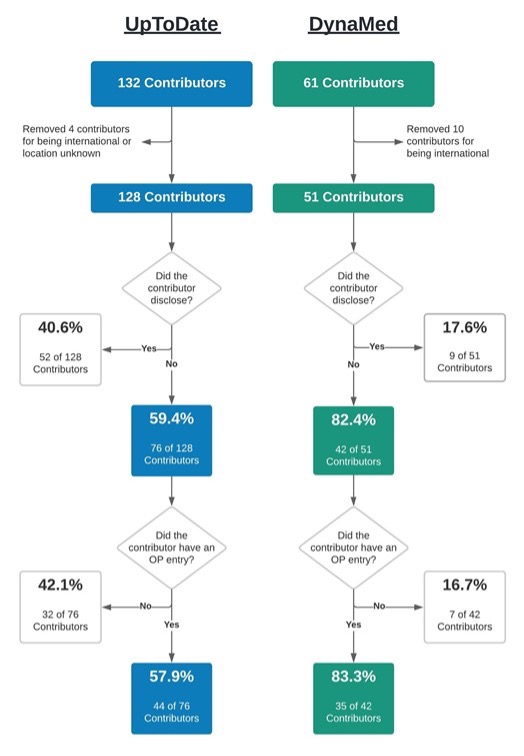
Response: Health care providers utilize subscription-based, point-of-care databases such as DynaMed and UpToDate to provide clinical care guidance and remain current on the latest evidence-based findings. Both of these websites maintain this content through a cadre of physician contributors who write and edit articles for these sites. These physician contributors are required to self-report any conflicts of interest (COI) as outlined by the respective policies on each website. However, prior COI research into similarly self-regulated areas, such as medical and pharmacology textbooks, and clinical practice guidelines, has found both appreciable potential COI and inconsistencies between self-reported and industry mandated disclosures (1-3).
This study (4) explored the accuracy of physician contributors to DynaMed and UpToDate by comparing their self-reported disclosure status with the financial remunerations they received from the healthcare industry (e.g., pharmaceutical companies) as reported to the U.S. Centers for Medicare and Medicaid Services’ Open Payments database. Physician contributors who reported “nothing to disclose” on their respective article topic but had an entry on Open Payments for having received money from industry, were classified as discordant and, thus, as having the potential for a COI. Additionally, total remuneration, gender, and payment category were investigated more in depth for each database.
SooYoung VanDeMar[/caption]
SooYoung VanDeMark, MBS
Geisinger Commonwealth School of Medicine
Scranton, Pennsylvania
MedicalResearch.com: What is the background for this study?
Response: Health care providers utilize subscription-based, point-of-care databases such as DynaMed and UpToDate to provide clinical care guidance and remain current on the latest evidence-based findings. Both of these websites maintain this content through a cadre of physician contributors who write and edit articles for these sites. These physician contributors are required to self-report any conflicts of interest (COI) as outlined by the respective policies on each website. However, prior COI research into similarly self-regulated areas, such as medical and pharmacology textbooks, and clinical practice guidelines, has found both appreciable potential COI and inconsistencies between self-reported and industry mandated disclosures (1-3).
This study (4) explored the accuracy of physician contributors to DynaMed and UpToDate by comparing their self-reported disclosure status with the financial remunerations they received from the healthcare industry (e.g., pharmaceutical companies) as reported to the U.S. Centers for Medicare and Medicaid Services’ Open Payments database. Physician contributors who reported “nothing to disclose” on their respective article topic but had an entry on Open Payments for having received money from industry, were classified as discordant and, thus, as having the potential for a COI. Additionally, total remuneration, gender, and payment category were investigated more in depth for each database.

 Dr. Soriano[/caption]
Victoria Soriano PhD
Research Assistant/Officer, Population Allergy
University of Melbourne
MedicalResearch.com: What is the background for this study?
Response: Peanut allergy is one of the most common childhood food allergies, and children rarely grow out of it. The only proven way to prevent peanut allergy is to give infants age-appropriate peanut products in the first year of life.
We previously showed there was a dramatic increase in peanut introduction from 2007-11 to 2018-19, following changes to infant feeding guidelines. We wanted to know if earlier peanut introduction would reduce peanut allergy in the general population (in Melbourne, Australia).
Dr. Soriano[/caption]
Victoria Soriano PhD
Research Assistant/Officer, Population Allergy
University of Melbourne
MedicalResearch.com: What is the background for this study?
Response: Peanut allergy is one of the most common childhood food allergies, and children rarely grow out of it. The only proven way to prevent peanut allergy is to give infants age-appropriate peanut products in the first year of life.
We previously showed there was a dramatic increase in peanut introduction from 2007-11 to 2018-19, following changes to infant feeding guidelines. We wanted to know if earlier peanut introduction would reduce peanut allergy in the general population (in Melbourne, Australia).

 Dr. Altan-Bonnet[/caption]
Nihal Altan-Bonnet, Ph.D.
Chief of the Laboratory of Host-Pathogen Dynamics
NHLBI
MedicalResearch.com: What is the background for this study? What are the main findings?
Response: Enteric viruses such as norovirus, rotavirus and astrovirus are responsible for nearly 1.5 billion global infections per year resulting in gastrointestinal illnesses and sometimes leading to death in the very young, in the elderly and in the immunocompromised. These viruses have been thought to traditionally infect and replicate only in the intestines, then shed into feces and transmit to others via the oral-fecal route (e.g. through ingestion of fecal contaminated food items).
Our findings reported in Nature, using animal models of norovirus, rotavirus and astrovirus infection, challenge this traditional view and reveal that these viruses can also replicate robustly in salivary glands, be shed into saliva in large quantities and transmit through saliva to other animals.
In particular we also show infected infants can transmit these viruses to their mothers mammary glands via suckling and this leads to both an infection in their mothers mammary glands but also a rapid immune response by the mother resulting in a surge in her milk antibodies. These milk antibodies may play a role in fighting the infection in their infants .
Dr. Altan-Bonnet[/caption]
Nihal Altan-Bonnet, Ph.D.
Chief of the Laboratory of Host-Pathogen Dynamics
NHLBI
MedicalResearch.com: What is the background for this study? What are the main findings?
Response: Enteric viruses such as norovirus, rotavirus and astrovirus are responsible for nearly 1.5 billion global infections per year resulting in gastrointestinal illnesses and sometimes leading to death in the very young, in the elderly and in the immunocompromised. These viruses have been thought to traditionally infect and replicate only in the intestines, then shed into feces and transmit to others via the oral-fecal route (e.g. through ingestion of fecal contaminated food items).
Our findings reported in Nature, using animal models of norovirus, rotavirus and astrovirus infection, challenge this traditional view and reveal that these viruses can also replicate robustly in salivary glands, be shed into saliva in large quantities and transmit through saliva to other animals.
In particular we also show infected infants can transmit these viruses to their mothers mammary glands via suckling and this leads to both an infection in their mothers mammary glands but also a rapid immune response by the mother resulting in a surge in her milk antibodies. These milk antibodies may play a role in fighting the infection in their infants .

A chiropractor can teach exercises to loosen up muscles and joints as well as perform the relevant procedures to reduce pain and discomfort....

 Dr. Barry[/caption]
Michael J. Barry, M.D
Director of the Informed Medical Decisions Program
Health Decision Sciences Center
Massachusetts General Hospital.
Professor of medicine at Harvard Medical School
Dr. Barry was appointed as Vice Chair of USPSTF in March 2021.
He previously served as a member from January 2017 through December 2020.
MedicalResearch.com: What is the background for this study? What are the main findings?
Response: The Task Force looked at the use of vitamin and mineral supplementation specifically for the prevention of heart disease, stroke, and cancer. We found that there is not enough evidence to recommend for or against taking multivitamin supplements, nor the use of single or paired nutrient supplements, to prevent these conditions.
However, we do know that you should not take vitamin E or beta-carotene for this purpose.
Dr. Barry[/caption]
Michael J. Barry, M.D
Director of the Informed Medical Decisions Program
Health Decision Sciences Center
Massachusetts General Hospital.
Professor of medicine at Harvard Medical School
Dr. Barry was appointed as Vice Chair of USPSTF in March 2021.
He previously served as a member from January 2017 through December 2020.
MedicalResearch.com: What is the background for this study? What are the main findings?
Response: The Task Force looked at the use of vitamin and mineral supplementation specifically for the prevention of heart disease, stroke, and cancer. We found that there is not enough evidence to recommend for or against taking multivitamin supplements, nor the use of single or paired nutrient supplements, to prevent these conditions.
However, we do know that you should not take vitamin E or beta-carotene for this purpose.
 Dr. Dryden-Peterson[/caption]
SCOTT DRYDEN-PETERSON, MD
Assistant Professor, Medicine, Harvard Medical School
Research Affiliate, Immunology and Infectious Diseases
Harvard T.H. Chan School Of Public Health
Associate Physician, Medicine, Infectious Diseases
Brigham And Women's Hospital
Research Associate, Botswana Harvard AIDS Institute
MedicalResearch.com: What is the background for this study?
Response: The combination of the antiviral medicine nirmatrelvir and ritonavir (Paxlovid) which boosts antiviral levels was found to reduce the need for hospitalization by nearly 90% among unvaccinated people. Whether nirmatrelvir plus ritonavir can also help vaccinated people was uncertain.
Dr. Dryden-Peterson[/caption]
SCOTT DRYDEN-PETERSON, MD
Assistant Professor, Medicine, Harvard Medical School
Research Affiliate, Immunology and Infectious Diseases
Harvard T.H. Chan School Of Public Health
Associate Physician, Medicine, Infectious Diseases
Brigham And Women's Hospital
Research Associate, Botswana Harvard AIDS Institute
MedicalResearch.com: What is the background for this study?
Response: The combination of the antiviral medicine nirmatrelvir and ritonavir (Paxlovid) which boosts antiviral levels was found to reduce the need for hospitalization by nearly 90% among unvaccinated people. Whether nirmatrelvir plus ritonavir can also help vaccinated people was uncertain.
 Dr. Taioli[/caption]
Emanuela Taioli, MD, PhD
Director, Institute for Translational Epidemiology
Professor, Population Health Science and Policy
Professor, Thoracic Surgery
Icahn School of Medicine at Mount Sinai
New York, NY
MedicalResearch.com: What is the background for this study?
Response: NYC experienced a halt on all elective care from March 22 to June 8, 2020, provoking reduced cancer screening rates, and delayed cancer care and treatment.
We wanted to quantify the effect of the “pause” on cancer stage at diagnosis using lung cancer as an example of a condition where early diagnosis can dramatically modify survival.
Dr. Taioli[/caption]
Emanuela Taioli, MD, PhD
Director, Institute for Translational Epidemiology
Professor, Population Health Science and Policy
Professor, Thoracic Surgery
Icahn School of Medicine at Mount Sinai
New York, NY
MedicalResearch.com: What is the background for this study?
Response: NYC experienced a halt on all elective care from March 22 to June 8, 2020, provoking reduced cancer screening rates, and delayed cancer care and treatment.
We wanted to quantify the effect of the “pause” on cancer stage at diagnosis using lung cancer as an example of a condition where early diagnosis can dramatically modify survival.
 Dr. Khurana[/caption]
Vikram Khurana, MD, PhD
Chief of the Division of Movement Disorders
Department of Neurology
Brigham and Harvard Medical School
Principal investigator, Ann Romney Center for Neurologic Diseases at the Brigham
MedicalResearch.com: What is the background for this study?
Response: Proteins abnormally accumulate in brain cells (neurons and glial cells) in all neurodegenerative diseases. In Parkinson’s disease and related disorders, the key protein that accumulates and aggregates is called “alpha-synuclein.” Presumably, when a protein like alpha-synuclein abnormally folds and aggregates, the abnormal form of the protein can become toxic to the neuron, eventually leading to cell death. Equally, the protein may no longer be able to carry out its normal function.
This begs the question – what does alpha synuclein actually do? Most evidence to date points to alpha-synuclein being involved in the transport of other proteins and chemicals around the cell, by closely associating with vesicles that are small circular containers enclosed by fat (“lipid) membranes. But alpha-synuclein is not just found associated with these vesicle membrane. It is found away from the membrane and it’s been unclear what it does there.
Dr. Khurana[/caption]
Vikram Khurana, MD, PhD
Chief of the Division of Movement Disorders
Department of Neurology
Brigham and Harvard Medical School
Principal investigator, Ann Romney Center for Neurologic Diseases at the Brigham
MedicalResearch.com: What is the background for this study?
Response: Proteins abnormally accumulate in brain cells (neurons and glial cells) in all neurodegenerative diseases. In Parkinson’s disease and related disorders, the key protein that accumulates and aggregates is called “alpha-synuclein.” Presumably, when a protein like alpha-synuclein abnormally folds and aggregates, the abnormal form of the protein can become toxic to the neuron, eventually leading to cell death. Equally, the protein may no longer be able to carry out its normal function.
This begs the question – what does alpha synuclein actually do? Most evidence to date points to alpha-synuclein being involved in the transport of other proteins and chemicals around the cell, by closely associating with vesicles that are small circular containers enclosed by fat (“lipid) membranes. But alpha-synuclein is not just found associated with these vesicle membrane. It is found away from the membrane and it’s been unclear what it does there.
 Dr. Chemaitelly[/caption]
Hiam Souheil Chemaitelly Ph.D.
Assistant Professor of Research in Population Health Sciences
Population Health Sciences
Weill Cornell Medical College
MedicalResearch.com: What is the background for this study?
Response: The Omicron BA.1 and BA.2 variants resulted in a large wave of infections. The level of protection provided by prior infection or vaccination with Pfizer and Moderna mRNA vaccines or a combination of both against infection with Omicron BA.1 and BA.2 subvariants was unknown.
Dr. Chemaitelly[/caption]
Hiam Souheil Chemaitelly Ph.D.
Assistant Professor of Research in Population Health Sciences
Population Health Sciences
Weill Cornell Medical College
MedicalResearch.com: What is the background for this study?
Response: The Omicron BA.1 and BA.2 variants resulted in a large wave of infections. The level of protection provided by prior infection or vaccination with Pfizer and Moderna mRNA vaccines or a combination of both against infection with Omicron BA.1 and BA.2 subvariants was unknown.


Lupus is a rare chronic, hard-to-diagnosis autoimmune disease which disproportionately impacts women of color, particularly Black women, and the implicit and explicit bias within the health care system may prevent them from receiving a timely diagnosis and the best care possible....
 Dr. Kerlikowske[/caption]
Karla Kerlikowske, MD.
Professor, Departments of Medicine and Epidemiology/Biostatistics,
Cancer Center Program Membership. Breast Oncology
UCSF
MedicalResearch.com: What is the background for this study?
Response: Digital breast tomosynthesis (DBT) was developed with the expectation it would improve detection of breast cancer in women with dense breasts and decrease false-positive results. DBT is now available at most breast screening centers.
Dr. Kerlikowske[/caption]
Karla Kerlikowske, MD.
Professor, Departments of Medicine and Epidemiology/Biostatistics,
Cancer Center Program Membership. Breast Oncology
UCSF
MedicalResearch.com: What is the background for this study?
Response: Digital breast tomosynthesis (DBT) was developed with the expectation it would improve detection of breast cancer in women with dense breasts and decrease false-positive results. DBT is now available at most breast screening centers.
 Dr. Lewis-Thames[/caption]
Marquita W. Lewis-Thames, PhD (she/her/Dr.)
Assistant Professor, Department of Medical Social Science
Center for Community Health, Member Researcher
Assistant Directors of Community Outreach and Engagement, Robert H. Lurie Comprehensive Cancer Center
Feinberg School of Medicine, Northwestern University
MedicalResearch.com: What is the background for this study? What are the main findings?
Response: Incidence, mortality, and survivorship provide a comprehensive description of cancer for a group of people. Differences in cancer incidence and mortality trends by rural-urban status and race and ethnicity are well documented, but urban-rural cancer survivorship trends by race and ethnicity are unknown. To this end, we examined almost 40 years of racial and ethnic differences by rural-urban status for 5-year survival of patients with lung, prostate, breast, and colorectal cancers.
Using a nationwide epidemiological assessment of 1975-2011 data from the SEER database, we found that 5-year cancer-specific survival trends increased for all cancer types and race and ethnic groups, regardless of rural or urban status.
Generally, rural, and non-Hispanic Black cancer patients had worse survival outcomes than others.
Dr. Lewis-Thames[/caption]
Marquita W. Lewis-Thames, PhD (she/her/Dr.)
Assistant Professor, Department of Medical Social Science
Center for Community Health, Member Researcher
Assistant Directors of Community Outreach and Engagement, Robert H. Lurie Comprehensive Cancer Center
Feinberg School of Medicine, Northwestern University
MedicalResearch.com: What is the background for this study? What are the main findings?
Response: Incidence, mortality, and survivorship provide a comprehensive description of cancer for a group of people. Differences in cancer incidence and mortality trends by rural-urban status and race and ethnicity are well documented, but urban-rural cancer survivorship trends by race and ethnicity are unknown. To this end, we examined almost 40 years of racial and ethnic differences by rural-urban status for 5-year survival of patients with lung, prostate, breast, and colorectal cancers.
Using a nationwide epidemiological assessment of 1975-2011 data from the SEER database, we found that 5-year cancer-specific survival trends increased for all cancer types and race and ethnic groups, regardless of rural or urban status.
Generally, rural, and non-Hispanic Black cancer patients had worse survival outcomes than others.
 Dr. Rome[/caption]
Benjamin N. Rome MD
Instructor, Harvard Medical School
Internal Medicine
Division of Pharmacoepidemiology and Pharmacoeconomics
Brigham and Women’s Hospital
MedicalResearch.com: What is the background for this study?
What are the main findings?
Response: Manufacturers of brand-name drugs are granted periods, free from direct competition, during which they can set and raise prices as they choose.
We found that the prices for newly marketed brand-name drugs increased by 20% per year from 2008 to 2021. In 2020 and 2021, nearly half of new drugs were launched at a price greater than $150,000 per year, compared with 9% of drugs in 2008-2013. These dramatic trends are only partly explained by changes in the types of drugs coming to market.
Dr. Rome[/caption]
Benjamin N. Rome MD
Instructor, Harvard Medical School
Internal Medicine
Division of Pharmacoepidemiology and Pharmacoeconomics
Brigham and Women’s Hospital
MedicalResearch.com: What is the background for this study?
What are the main findings?
Response: Manufacturers of brand-name drugs are granted periods, free from direct competition, during which they can set and raise prices as they choose.
We found that the prices for newly marketed brand-name drugs increased by 20% per year from 2008 to 2021. In 2020 and 2021, nearly half of new drugs were launched at a price greater than $150,000 per year, compared with 9% of drugs in 2008-2013. These dramatic trends are only partly explained by changes in the types of drugs coming to market.
 Dr. Singhal[/caption]
Sachi Singhal, MD
Department of Medicine
Crozer Chester Medical Center
Upland, PA
MedicalResearch.com: What is the background for this study? What are the main findings?
Response: This study focuses on analysing the National Inpatient Sample for patients with breast cancer, their breakdown by race, gender and US regions, and their mortality per sub-group.
The main findings are that African Americans, especially AA women are at significantly increased odds of dying from metastatic breast cancer in the United States.
Dr. Singhal[/caption]
Sachi Singhal, MD
Department of Medicine
Crozer Chester Medical Center
Upland, PA
MedicalResearch.com: What is the background for this study? What are the main findings?
Response: This study focuses on analysing the National Inpatient Sample for patients with breast cancer, their breakdown by race, gender and US regions, and their mortality per sub-group.
The main findings are that African Americans, especially AA women are at significantly increased odds of dying from metastatic breast cancer in the United States.